If Korea could grant the title “national actor” to only one person, the answer―then and now―would be Ahn Sung-ki. That wasn’t just about a tireless career that began at age 5 and spanned more than 170 films over 69 years.
He stood at the center of Korean cinema’s rise and stepped forward when the industry faced hard times. Beyond a glittering resume, Ahn was revered for his character―respected by seniors and juniors alike. Great acting is common; greatness as a human being is not. Ahn embodied both.
Ahn died at 74. Over five days of industry-led memorials, an unending procession of filmmakers and colleagues paid their respects, and countless stories of quiet generosity surfaced from those who knew him best.
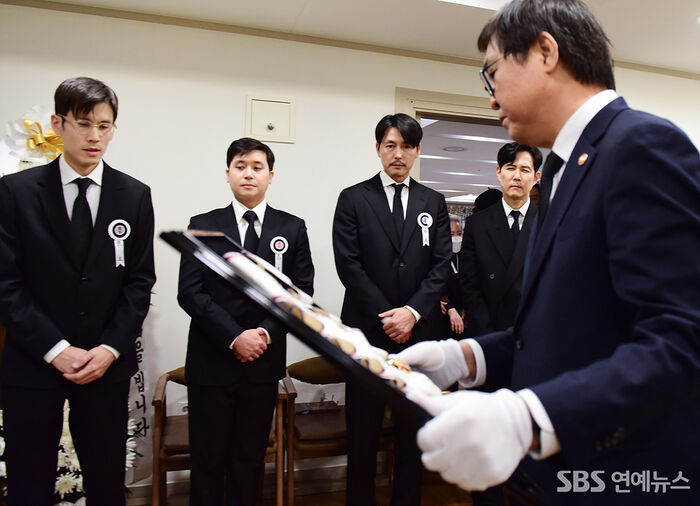
The five-day farewell was a fitting tribute to a “national actor.” Filmmakers rearranged schedules to gather at the hall, pitching in wherever needed. The Seoul Film Center opened a public memorial so ordinary citizens could say goodbye.
A devout Catholic, Ahn’s funeral rites were held at Myeongdong Cathedral: the departure at 7 a.m., funeral Mass at 8, and memorial service at 9 on the 9th. Jung Woo-sung carried the portrait, while Lee Jung-jae presented a state decoration.
Kim Doo-ho of the Shin Young-kyun Arts & Culture Foundation―where Ahn served as chair during his lifetime―delivered a remembrance of Ahn’s life and career. Eulogies were read by Jung Woo-sung and director Bae Chang-ho, who chaired the funeral committee. Ahn’s eldest son, Ahn Da-bin, spoke on behalf of the family.
Pallbearers included Seol Kyung-gu, Park Chul-min, Yoo Ji-tae, Park Hae-il, Jo Woo-jin, and Ju Ji-hoon. He was laid to rest at Byeolgeurida Memorial Park in Yangpyeong.
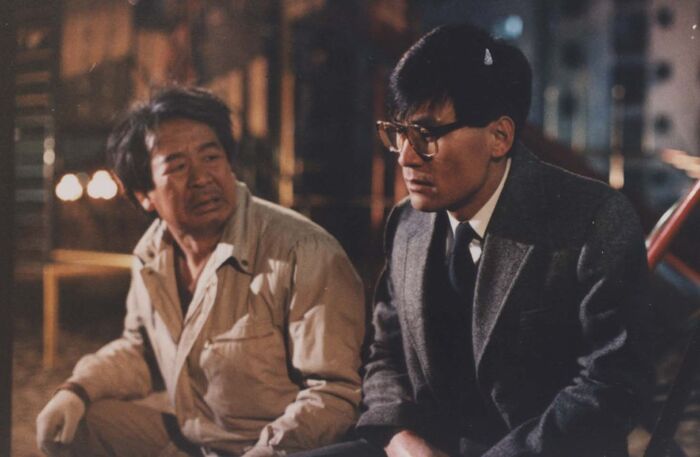
Born in 1952, Ahn debuted at age 5 in Kim Ki-young’s 1957 film "Twilight Train." He went on to headline or appear in more than 170 films over nearly seven decades.
At the height of Korean cinema’s boom in the 1980s and ’90s, he worked with auteurs including Im Kwon-taek, Bae Chang-ho, Lee Jang-ho, Kang Woo-suk, and Lee Myung-se, helping elevate the industry’s global standing. He set new markers as the lead of "Silmido," the first Korean film to draw over 10 million admissions.
Beginning in 1998, he served as an executive member of the Busan International Film Festival, championed the screen quota during the 2000s, and fronted anti-piracy efforts. For more than 30 years, he amplified good by serving as a UNICEF Goodwill Ambassador.
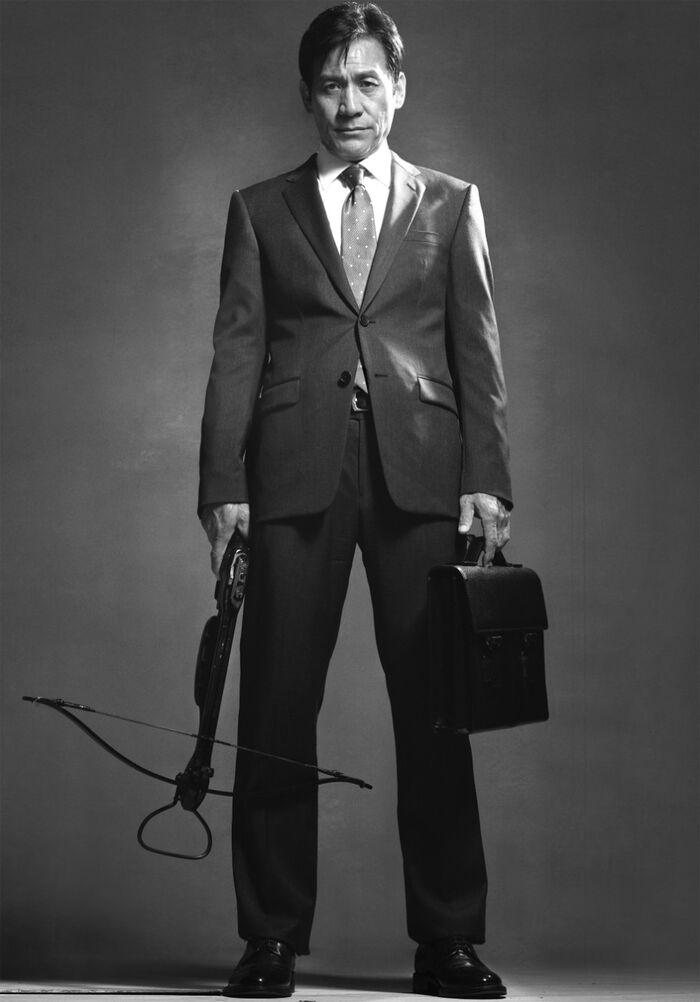
As he entered middle age, Ahn increasingly took pivotal supporting roles. In "The Warrior," he stepped back from top billing for the first time, bringing gravitas without ego. Filming in the heart of China’s desert, he worked without complaint―and when his scenes wrapped early, he built campfires to keep younger castmates warm.
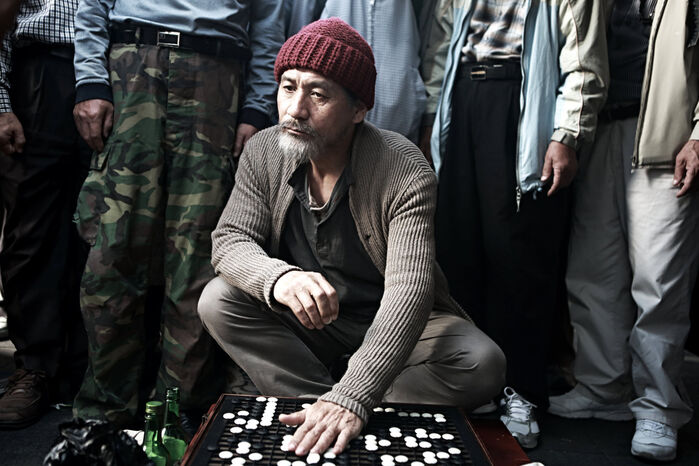
Even later in life, his craft never dimmed. In "The Divine Move" (2014), he proved that screen time isn’t the measure of presence, playing a mentor whose quiet authority grounded the film. In "The Hunt" (2016), he surprised audiences with a shirtless scene―not for vanity, but as a testament to the discipline it took in his 60s to transform for a single moment on screen.
A fixture on screens well into his mid-60s, Ahn was diagnosed with blood cancer in 2019. He was declared in remission the following year, but the illness returned. Even during treatment, he mustered the strength to film "Hansan: Rising Dragon" (2022) and "Noryang: Deadly Sea" (2023).
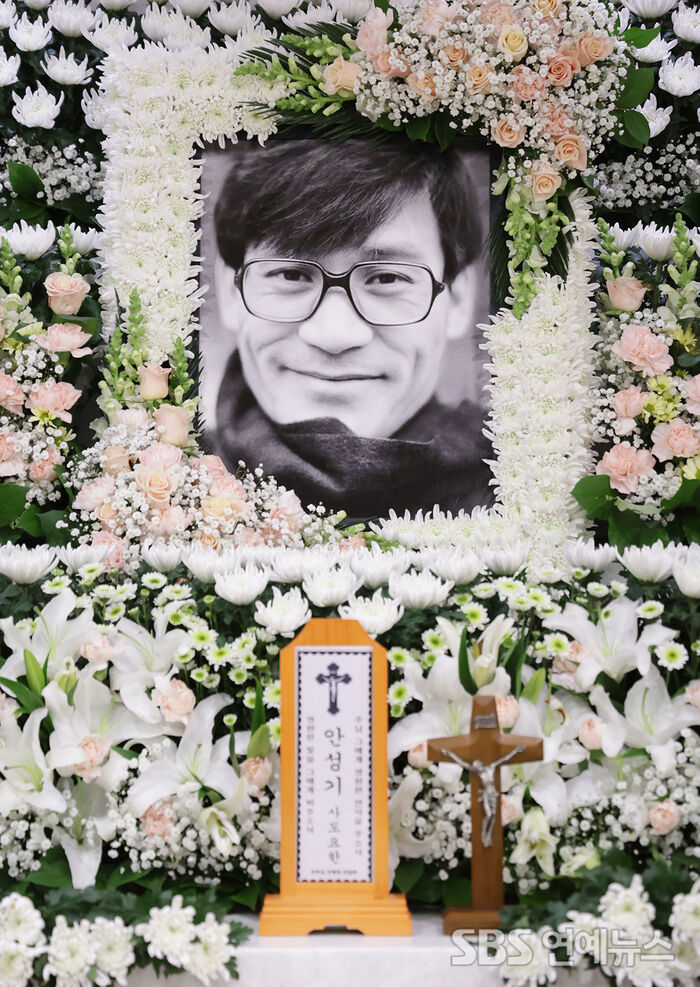
His funeral portrait―shot by photographer Koo Bon-chang during production of "Our Sweet Days of Youth" (1987)―was a favorite of Ahn and his wife, Oh So-young.
Audiences shared their “sweet days of youth” with Ahn Sung-ki, and generations of filmmakers grew up on his movies, building today’s content powerhouse in his wake. After a life devoted wholly to cinema, Ahn rests as the eternal “national actor” and a towering figure of Korean film.
(SBS Entertainment News | Kim Ji-hye)