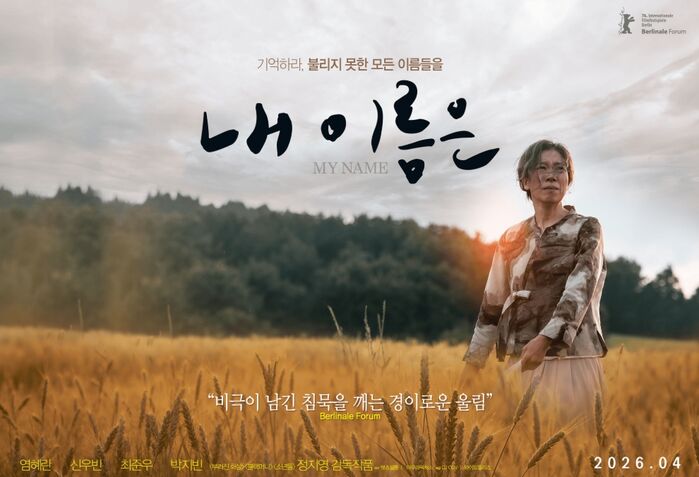
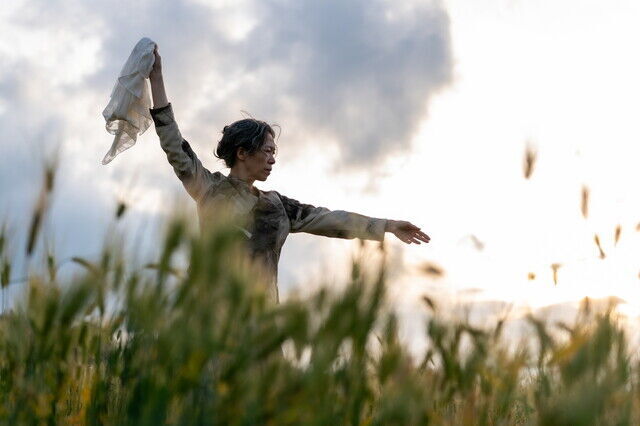
The film "My Name" sprints toward its ending. After finally unlocking her memories, Jeong-soon stands in a barley field where the departed left their wounds behind. She dances to say goodbye to the past. It’s not a joyful dance. It carries sorrow. And it’s more than just releasing grief. It feels like a memorial rite, soothing the unjust spirits tied to that land.
Director Jeong Ji-young doesn’t stop at revisiting Jeju’s painful history. He traces how violence is born in the past and handed down into the present.
A “name” is the film’s key metaphor. Jeong-soon (Yeom Hye-ran) names her son Young-ok (Shin Woo-bin). For a boy, the name sounds unusual―and dated for its era. A high school?aged Young-ok gets teased at school because of it.
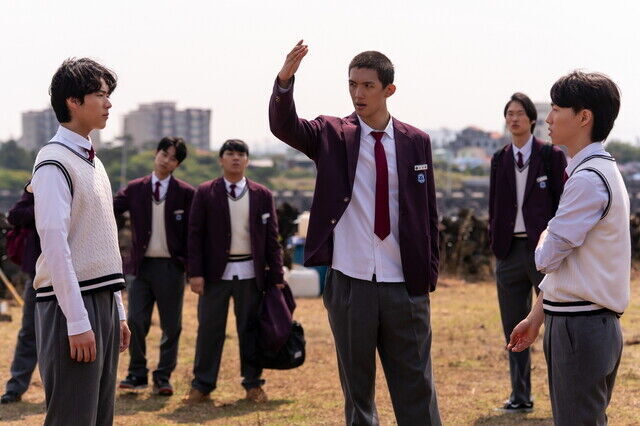
A name, given at birth, signals who we are. It’s a marker of self and identity. In "My Name", this “search for a name” is crucial to overcoming trauma. It also fuels the mystery element around recovering memory, keeping viewers constantly curious.
As children, Jeong-soon and Young-ok meet different fates within the tragedy of Jeju 4·3. Jeong-soon survives. She never forgets “Young-ok,” a name that was both “me” and “you,” and later gives it to the person she holds most dear in the present.
The story moves from present to past and back again. Choosing 1947 and 1998 is deliberate. 1949 is cited as the year that set off Jeju 4·3, while 1998 marks when the issue began to enter full public discourse in Korea. At the time, the Kim Dae-jung administration took political and institutional steps toward truth-finding and restoring honor for the victims of 4·3.

The film’s core structure places state violence in 1949 alongside school violence in 1998. Some may question pairing two very different forms of violence. The balance and transition between them may not feel perfect. But the director’s intent―to lay bare the mechanics of violence―comes through clearly. You can also sense a veteran filmmaker’s long, careful effort to connect with today’s younger audiences.
Above all, Jeong Ji-young doesn’t just list a history of violence. He insists on hope through love and solidarity. Jeong-soon’s warm embrace with Young-ok―and her grief-stricken dance―offer clear images of overcoming the past and finding hope in the present. Without didactic lines, the camera’s gaze earns the audience’s quiet nod.
After watching "My Name", President Lee Jae-myung said, “Crimes caused by state violence should have no statute of limitations. Responsibility must be pursued forever, for generations to come.” He added, “I hope we remember Jeju’s pain and find hope and courage beyond the wounds.” His administration has begun moves to abolish civil and criminal statutes of limitations for state-violence crimes.
Setting history right is a shared duty for our generation, living in a prosperous Korea. Director Jeong Ji-young delivers that message through story. And Yeom Hye-ran consoles the pain of that day―and the souls who suffered―through the language of her body.
As author Han Kang once said, “The past helps the present, and the dead save the living.” The reverse also holds: a present set right can heal a forgotten, painful past.
(SBS Entertainment News | Kim Ji-hye)