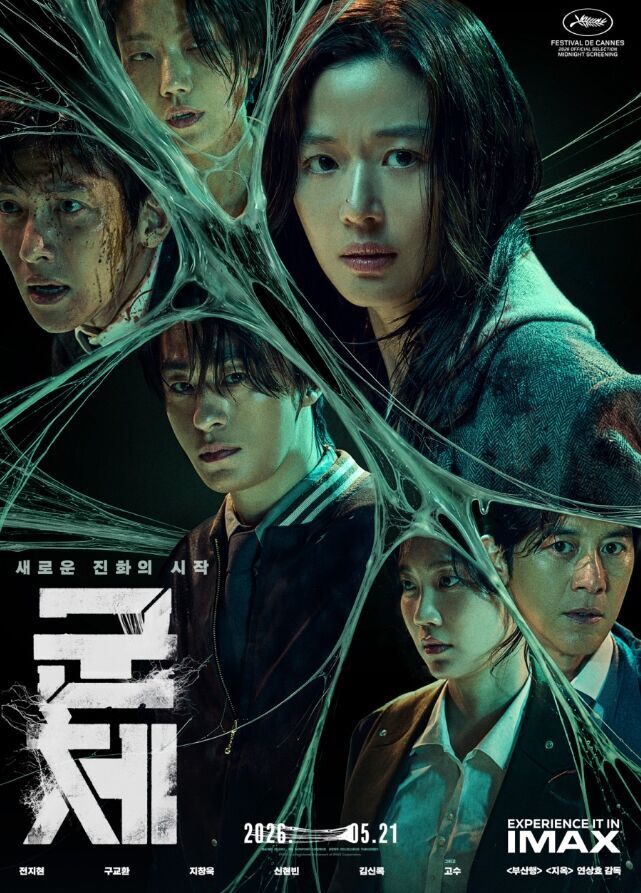
A blockbuster has arrived in local theaters after a long drought, drawing high expectations from audiences. It is none other than director Yeon Sang-ho's new film, COLONY.
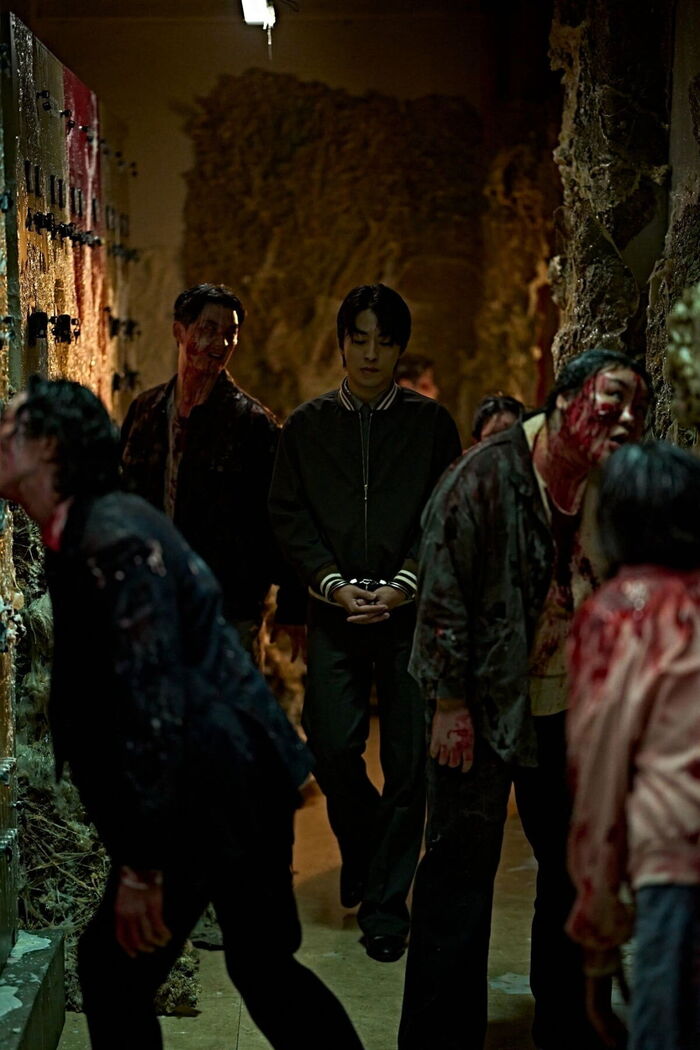
COLONY is a film about isolated survivors trapped inside a building sealed off by a mysterious outbreak, fighting against infected hosts who evolve in unpredictable ways. It is the latest work by Yeon Sang-ho, who rose to stardom and gained international acclaim with Train to Busan in 2016.
Like Train to Busan, the film had its world premiere in the Midnight Screenings section of this year's Cannes Film Festival. Just six days after its screening in Cannes, it meets domestic audiences—making it a truly fresh release.
On its release day, COLONY proved its summer-blockbuster-level anticipation by surpassing a 50% reservation rate and 250,000 ticket presales. It is expected to easily secure the top spot at the box office on its opening day.
However, as the recent trend of audiences flocking to theaters during a film's opening weekend has weakened, word-of-mouth is more critical than ever. This year's hits that drew over 2.5 million viewers—Once We Were Us (2.6 million), The King's Warden (16.87 million), and Salmokji: Whispering Water (3.19 million)—all showed a pattern of drawing larger crowds in their second and third weeks than in their opening week.
COLONY is a massive production with a net budget of 17 billion won and a total production cost of 20 billion won, including marketing expenses. Yet, its break-even point is set at around 3 million viewers. While a simple calculation would put the figure much higher, the break-even point was significantly lowered through pre-sales in overseas markets. Director Yeon Sang-ho's representative work, Train to Busan, also significantly lowered its break-even point after achieving record-breaking sales at the Cannes Film Market.
Lately, box office success has not been proportional to a film's scale. All three of this year's hits that surpassed their break-even points were low-to-mid-budget films with production costs under 10 billion won, yet they delivered unexpected entertainment and high quality through efficient production. On the other hand, Humint, which poured 23.5 billion won into scale and spectacle, fell far short of its break-even point, drawing only 1.98 million viewers. Humint managed to recoup a significant portion of its losses through an exclusive deal with Netflix.

Instead of a summer release, COLONY opted for a May release. Another recent trend in the film industry is the fading concept of 'peak seasons.' Even outside of July and August—traditionally classified as the peak theater season when the largest crowds gather—audiences will flock to theaters as long as the movie is entertaining. The Roundup series, Exhuma, and The King's Warden all became 10-million-viewer mega-hits during the spring season, rather than the summer.
COLONY is one of the year’s most anticipated big-budget releases, drawing attention for both its scale and buzz. It marks the latest work from director Yeon Sang-ho, who achieved some of the most notable commercial successes in Korean cinema during the 2010s. The film is also significant as the comeback project of Jun Ji-hyun, widely regarded as the only actress in the Korean film industry capable of leading a blockbuster with a budget exceeding 10 billion won entirely on her own. Adding to the anticipation, the movie is a zombie thriller packed with visually and aurally spectacular set pieces.
That said, while Yeon Sang-ho directed the hugely acclaimed Train to Busan, he is also the director behind Peninsula, which received a far more mixed response. In addition, he has continuously released more than one project per year across both television and film. While he is undoubtedly Korea’s foremost zombie genre specialist, there are also concerns that his prolific output may have led to a sense of creative repetition.
As such, COLONY is expected to serve as a key barometer for evaluating Yeon Sang-ho’s capabilities as he returns to large-scale filmmaking for the first time in a while.
The film opened in theaters nationwide today (May 21).
(SBS Entertainment News | Kim Ji-hye)