[Anchor]
The won-dollar exchange rate closed at 1,535 won in daytime trading today (June 8), marking its first decline in four trading days. The rate had surged to as high as 1,555 won shortly after the market opened. However, it shifted downward after authorities issued a verbal intervention, stating they "will not tolerate excessive volatility and herd behavior," and the National Pension Service decided to sell forward exchange contracts, effectively releasing future dollar holdings into the market. Nevertheless, these measures are largely seen as short-term remedies. The exchange rate has remained in the 1,500-won range for 15 consecutive trading days, the longest streak since the Asian financial crisis. This high exchange rate is driving up import prices, placing a direct burden on small and medium-sized enterprises and ordinary citizens.
Lee Tae-kwon reports.
[Reporter]
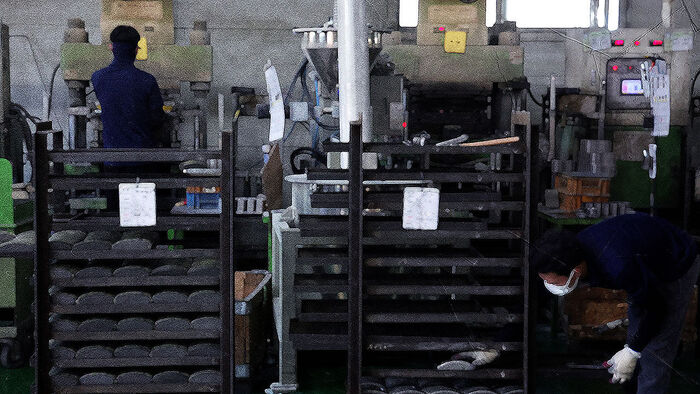
This is a small manufacturing company that produces food packaging materials.
Its main raw materials, such as polyethylene, are derived from naphtha.
With raw material prices soaring due to the war in the Middle East and the exchange rate rising, costs have become a significant burden.
[Jung Hee-guk / CEO of a food packaging company: Because of the oil crisis, (raw material) prices have risen by 55%, and with the exchange rate also climbing, that adds another 5 to 6% to our burden...]
Franchise coffee shops, which must import coffee beans, have raised their prices one after another, citing the high exchange rate.
[Park Sun-woo / Yongsan-gu, Seoul: Even 100 or 200 won can add up to a large amount if you drink a few cups. So, I think it feels quite significant.]
At airport currency exchange counters, the won-dollar rate has surpassed 1,600 won, increasing the burden on travelers.
The high exchange rate drives up the prices of imported goods, ultimately falling on the shoulders of consumers.
Research suggests that a 10% increase in the exchange rate leads to a rise in the consumer price index of approximately 0.3 to 0.5 percentage points.
The high-flying won-dollar rate is driven by the strengthening dollar amid the possibility of U.S. interest rate hikes, as well as a sharp increase in demand for dollar conversion, with foreign investors net selling 69 trillion won worth of domestic stocks over the past month.
Financial authorities are also recently focusing on speculative forces betting on the rise of the exchange rate and export companies that are not converting dollars earned overseas.
[Seok Byoung-hoon / Professor of Economics at Ewha Womans University: Export companies that should be supplying dollars do not need to convert them into won because they have to fulfill investments in the U.S., which is causing the rate to soar further due to a supply-demand imbalance.]
While foreign exchange authorities have managed to put out the immediate fire through intervention, the external factors driving the exchange rate higher remain strong, making it a frustrating situation where a change in direction is difficult to achieve in the short term.
(Reported by Kim Hak-mo | Video by Jung Yong-hwa | Graphics by Jang Chae-woo)
※ Please note: This article was translated by AI and may contain errors.
Authorities Intervene to Cool Exchange Rate, but High Costs Weigh on Economy
Jun 8, 2026