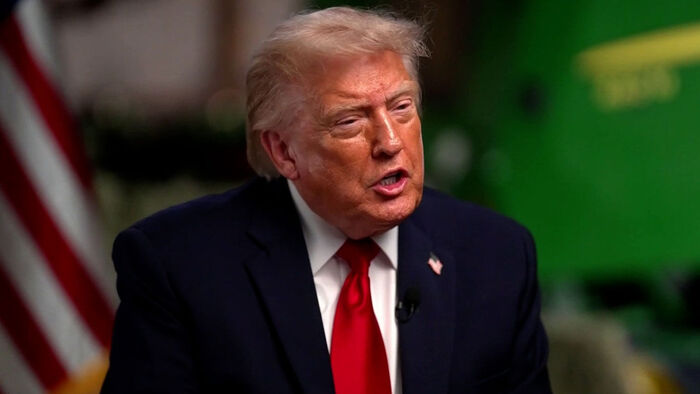
▲ U.S. President Donald Trump
The U.S. administration under President Donald Trump has urged European NATO member states to use their defense budgets to replace equipment from Chinese telecommunications firm Huawei installed in their communication networks and critical infrastructure, Bloomberg reported on June 7 (local time).
The U.S. has long considered Chinese companies like Huawei a national security threat and has excluded them from its own networks; now, it is demanding that its key military allies in Europe follow suit.
According to the Bloomberg report, which cited anonymous sources, Joshua Young, the U.S. State Department’s China coordinator, stated at a closed-door meeting in Brussels, Belgium, last month that each NATO ally should utilize defense-related budgets to remove Huawei equipment and replace it with products from other companies.
The "defense-related budget" mentioned for replacement costs refers to the 1.5% of indirect security spending out of the 5% of GDP that NATO allies have set as a target for defense spending, rather than the 3.5% allocated for direct military expenditures.
While Young did not name a specific country, one source said the remarks were aimed at Germany.
NATO member states did not show an immediate reaction to these remarks from a U.S. diplomat of relatively low rank.
The European Union (EU) is seeking to ban Chinese companies from its telecommunications networks as part of a plan to strengthen oversight through revisions to its cybersecurity laws, but Germany and Spain are leading opposition to this move.
Germany and Spain have expressed concerns that an EU-wide ban on products from Chinese firms like Huawei could trigger retaliatory measures from China.
Separately, the U.S. has been publicly criticizing allies that include non-defense-related spending in their 1.5% indirect security expenditure.
In the case of Italy, the country had considered including the construction cost of the world's longest suspension bridge in its indirect security spending before withdrawing the plan, according to Bloomberg.
※ Please note: This article was translated by AI and may contain errors.