[Anchor]
Joining us for Tuesday's "Friendly Economy" is reporter Han Jiyeon. Reporter Han, they say it's really hard to find a place to rent on a monthly basis these days, right?
[Reporter]
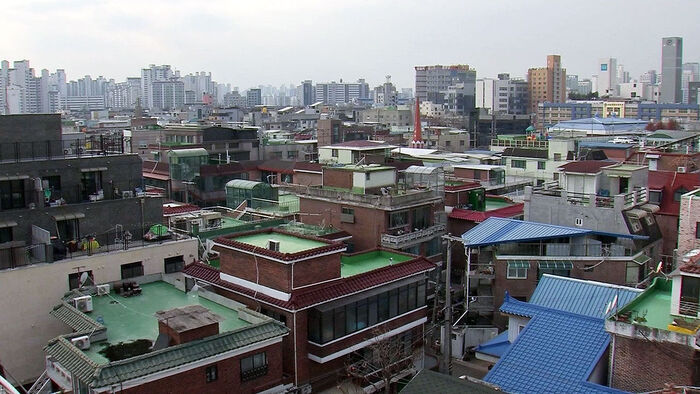
That's right. Rental contracts for villas with monthly rents exceeding 1 million won have increased significantly.
They have surged by nearly 42% in just one year.
In terms of volume, the number of cases where monthly rent exceeds 1 million won has surpassed 4,000 this year in Seoul alone.
While many people previously sought relatively cheaper villas as an alternative due to expensive rents for apartments and officetels, villas are now no longer free from the burden of high monthly rents.
You might think that rents exceeding 1 million won only apply to expensive areas like Gangnam.
However, looking at the monthly rent price index, which surveys villas across various regions of Seoul, it has risen by 4.4% in a year.
Considering that the growth rate during the same period last year was around 2%, the pace of the increase has more than doubled.
In other words, this is not an issue confined to specific areas, but rather a growing rent burden across Seoul as a whole.
Indeed, there are quite a few voices recently expressing more concern over the lease (jeonse) and monthly rental markets than home prices themselves.
[Anchor]
With villa rents rising like this, what are young people supposed to do?
[Reporter]
It is a major concern. While the income of young people has decreased, their housing costs have actually gone up.
There are also predictions in the market that the burden of monthly rent will grow even heavier in the future.
In fact, as of the first quarter of this year, the average monthly income of household heads aged 39 and under decreased by 1.7% compared to last year.
Among all age groups, the 20s and 30s generation was the only one to see a decline in income.
On the other hand, actual housing expenditures increased by more than 11%.
Their salaries have shrunk, but the money spent on housing has increased.
The recent jeonse (lump-sum deposit lease) market is also showing unusual signs.
Jeonse prices for apartments in southeastern Seoul have risen by more than 3% so far this year, far outpacing the growth rate of purchase prices.
As the burden of jeonse increases, the demand for monthly rentals may also rise.
The supply situation is also unfavorable.
From January to April this year, the number of completed row and multi-family houses in Seoul stood at only around 1,800 units.
Compared to the same period in 2022, before the full impact of the jeonse fraud scandal was felt, this is a decrease of more than 72%.
With supply shrinking while demand for monthly rentals persists, some analysts suggest that monthly rents could rise even further.
On top of this, starting next month, the criteria for signing up for the Korea Housing & Urban Guarantee Corporation (HUG) jeonse deposit return guarantee will be tightened.
Simply put, this means it could become harder for landlords to receive high jeonse deposits as they did in the past.
For example, a home that could previously be leased with a deposit of 400 million won may now have to find tenants at a lower amount.
In that case, landlords might try to make up for the shortfall in the deposit by charging monthly rent.
The market views that this could accelerate the so-called "wolse-ization" (transition to monthly rent), where deposits decrease and monthly rents increase.
[Anchor]
While finding a lease or monthly rental is difficult, buying a home is even more challenging, isn't it?
[Reporter]
Prices for new apartments also continue to rise.
The average sale price for Seoul apartments of the "national standard size" with a dedicated area of 84 square meters has surpassed 2.1 billion won.
This is the result of calculating the average price of Seoul apartments sold over the past year.
It has exceeded 2.1 billion won for the first time since relevant statistics began to be compiled.
This is an increase of more than 32% compared to a year ago.
The figure of 2.1 billion won itself might feel quite high.
This figure represents the average price of the national standard size for private apartments sold in Seoul.
Prices for small and medium-sized apartments are also rising, not just the national standard size.
The average sale price for a dedicated area of 59 square meters has also surpassed 1.5 billion won for the first time.
This indicates that the barrier to entry for purchasing a newly built apartment has become much higher.
This is analyzed to be the result of growing burdens from construction and labor costs, coupled with consecutive sales of high-priced complexes centered around highly preferred areas.
Ultimately, the current market is in a situation where it is difficult to find a jeonse lease, the burden of monthly rent is growing, and prices for new apartments are rising.
The government maintains a stance of expanding supply.
However, because it inevitably takes a considerable amount of time from actual groundbreaking to sales and move-in, the market expects that the burden of housing costs will not easily decrease for the time being.
※ Please note: This article was translated by AI and may contain errors.
Surge in Villas with Monthly Rent Over 1 Million Won Leaves Youth Struggling
By Han Jiyeon | Jun 9, 2026