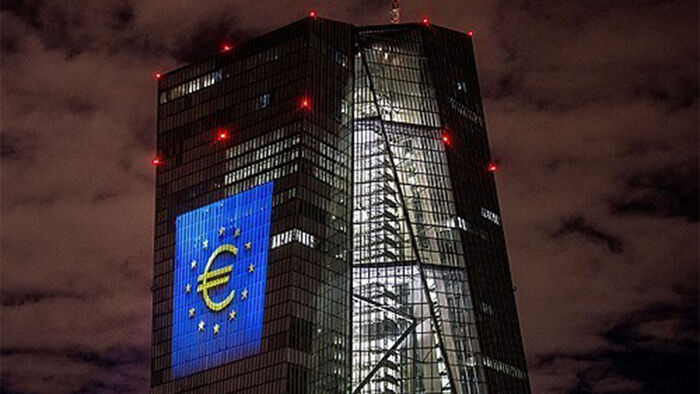
▲ European Central Bank
Europe is being gripped by fears of stagflation—a combination of high inflation and economic stagnation—as the war in Ukraine is compounded by the prolonged conflict in Iran.
With the Strait of Hormuz blocked and energy costs rising, signs point to a prolonged period of inflation and slowing growth, casting a dark shadow over the European economy.
The New York Times (NYT) reported on June 8 (local time) that more than three months into the Iran war, the economic shock to Europe is becoming protracted.
According to the NYT, Europe had already suffered a significant economic blow from the war in Ukraine, which began in 2022.
The disruption of natural gas supplies caused inflation to soar into the double digits. While aggressive interest rate hikes were implemented to curb this, they ultimately led to a contraction in economic activity.
The Iran war broke out just as the region was beginning to recover from that economic shock.
This time, the Strait of Hormuz has been blocked.
As a key route for the transport of energy and raw materials, the closure of this chokepoint has driven up prices across Europe.
The average inflation rate for the 21 countries using the euro reached 3.2% in May, the highest level since September 2023.
This is a sharp increase considering the inflation rate was 1.9% in February, before the war began.
Rising inflation is once again leading to expectations of interest rate hikes.
The market anticipates that the European Central Bank (ECB) will raise its policy rate by 0.25 percentage points at its monetary policy meeting on June 11 and implement another hike by the end of the year.
At the beginning of the war, the prevailing view was that Europe would experience a sharp but short-term shock, leading to a V-shaped economic recovery. However, with the continued blockade of the Strait of Hormuz, the outlook has shifted toward a slow, U-shaped recovery.
Economists are particularly concerned that even if the Strait of Hormuz were to reopen, oil prices are unlikely to fall in the short term.
They argue that supply shortages are inevitable, as it will take time to restore oil production to pre-war levels after the disruptions and shutdowns caused by the conflict.
The NYT assessed that as rising energy costs increase fiscal burdens and reduce investment capacity, the pressure of economic slowdowns caused by inflation and interest rate hikes could persist at least until next year.
The European Commission also stated that "the impact of the energy shock will continue until 2027," projecting that economic growth for next year will remain at just 1.4%.
British investment bank Barclays has halved its growth forecast for the European economy this year to 0.7% and expects growth to only slightly increase to 0.9% next year.
Mariano Cena, a senior economist at Barclays, analyzed that "short-term shocks are becoming long-term," adding that the longer energy supply disruptions in the Persian Gulf continue, the more severe their impact will be.
(Photo: AP, Yonhap News)
※ Please note: This article was translated by AI and may contain errors.