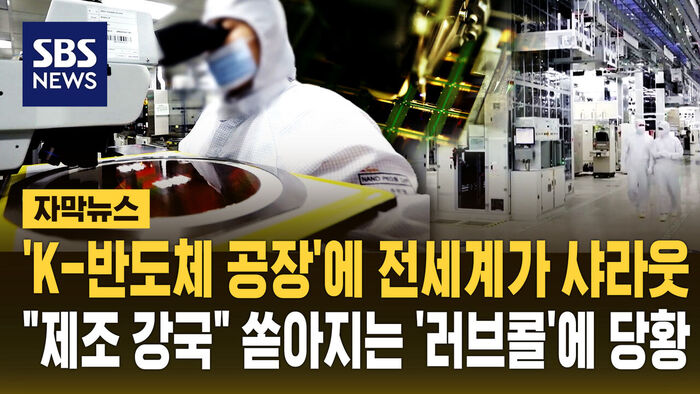
The domestic semiconductor industry is reportedly facing a dilemma over the selection of sites for its semiconductor manufacturing plants, also known as fabs.
As investment demands pour in from both overseas and various regions within South Korea, companies are facing political and diplomatic pressure to disperse their factories away from the Yongin Semiconductor Mega Cluster to other regions.
Currently, major countries around the world are engaged in an intense race to attract semiconductor manufacturing plants from Samsung Electronics and SK Hynix.
In particular, the United States and China are using massive subsidies and tariff policies as leverage to pressure companies to expand production facilities within their borders. Emerging nations, including Vietnam, have also joined the race to host packaging and research and development (R&D) hubs by offering exceptional tax incentives and land support.
Domestically, there are strong demands from political circles and non-capital regions as well. For instance, attracting semiconductor facilities is being discussed as a core project for the Jeonnam-Gwangju Integrated Metropolitan City, which is set to launch this coming July.
The government also maintains that it will consider the principle of balanced regional development as a key criterion when promoting industrial policies.
However, the semiconductor industry is reportedly expressing concerns about this atmosphere.
Industry insiders point out that it is difficult to secure sufficient "industrial water," an essential resource for semiconductor manufacturing processes, in regions such as the Jeolla and Yeongnam areas. They argue that securing additional water would require massive costs, such as investing trillions of won to build new, large-scale single pipeline networks.
Regarding seawater desalination, which is considered an alternative to water shortages, the industry is concerned about potential process defects and soaring production costs, given the nature of semiconductor micro-fabrication that requires "ultra-pure" water.
There is also criticism that such dispersion could undermine the "agglomeration effect," which is the core of the semiconductor ecosystem.
The industry explains that if infrastructure planned for regions like the Chungcheong area is physically split across other regions, logistics costs will inevitably rise, and the ability to respond to crises will diminish.
Because of this, warnings are emerging that investments could instead head overseas. In particular, the site in Taylor, Texas, held by Samsung Electronics, is drawing attention as it spans approximately 500 square meters, allowing for the construction of up to nine additional semiconductor fabs in the future.
Analysts suggest that companies may determine that choosing the Taylor site, where water and power infrastructure support from the U.S. government is guaranteed, carries less risk than domestic investment.
Reported by Kim Minjeong | Video by Lee Da-in | Graphics by Yook Do-hyun | Produced by SBS Digital News
※ Please note: This article was translated by AI and may contain errors.
Global "Shout-outs" for K-Semiconductor Plants: Manufacturers Face Dilemma Over Mounting "Love Calls"
By Kim Minjeong | Jun 9, 2026