[Anchor]
As the war between the U.S. and Iran drags on, Japan is struggling with naphtha supply issues. Some snack products have even appeared in black-and-white packaging to save on printing costs. With the government's explanations regarding naphtha supply failing to gain traction, public dissatisfaction and criticism toward the current administration are growing.
Tokyo, Correspondent Moon Jun-mo reports.
[Reporter]
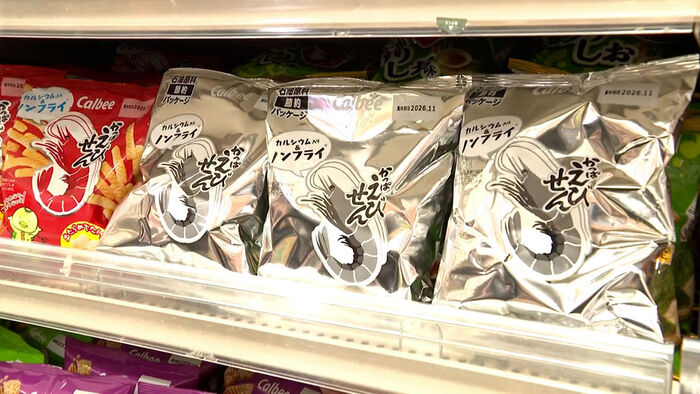
At a supermarket in Tokyo, the same product is displayed in black-and-white packaging next to the original red snack bags.
The top of the bag reads, "Packaging designed to save petroleum resources."
A famous Japanese confectionery company has begun selling some of its products with redesigned packaging to reduce ink usage.
[Consumer: It feels like a problem much closer to our daily lives. I think it will serve as an opportunity for children and the younger generation to realize the reality of the naphtha issue.]
At convenience stores, cup colors that previously distinguished types of instant coffee have been unified to white, and a pasta product has stopped printing cooking times on the bands used to bundle the noodles.
Because naphtha is a raw material for countless petrochemical products, including ink and plastic, the impact of supply disruptions is spreading everywhere.
In Chiba Prefecture, shelves are empty due to a shortage of standardized trash bags, with signs posted stating, "Due to the situation in the Middle East, deliveries may be delayed; we ask for your understanding in case of stockouts."
Some stores have even placed restrictions, allowing only one bundle per household.
[Supermarket Employee: We have no stock other than what is currently on display here.]
Supermarkets are also removing colors from fresh food containers and replacing plastic containers with cheaper alternatives like plastic wrap.
[Consumer: It's a good thing if they can avoid raising prices by changing the packaging.]
With a major household goods company deciding to raise prices on all products, including diapers, by more than 15%, the "naphtha shock" is now transferring to the financial burden of ordinary households.
[Sanae Takaichi / Prime Minister of Japan: While we are in a situation where we can continue to supply chemical products made from crude oil and naphtha next year, bottlenecks are occurring in the distribution process.]
In a recent poll, Prime Minister Takaichi's approval rating fell slightly. Notably, 64% of respondents said they "cannot accept" the government's explanation regarding naphtha supply, which is being pointed to as a cause for political discontent.
(Reported by Han Cheol-min and Moon Hyun-jin | Video by Lee Seung-hee | Graphics by Choi Jae-young)
※ Please note: This article was translated by AI and may contain errors.
Black-and-White Snack Packaging Appears in Japan Amid 'Naphtha Shock' and Falling Approval Ratings
Jun 9, 2026