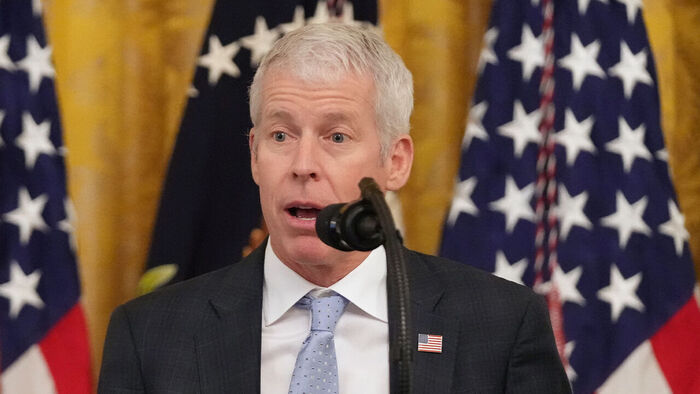
▲ U.S. Secretary of Energy Chris Wright
U.S. Secretary of Energy Chris Wright stated on June 9 (local time) that the number of vessels passing through the Strait of Hormuz is "increasing very significantly."
Secretary Wright made the remarks while attending the '2026 Global Energy Forum' hosted by the Atlantic Council, a U.S. think tank, in Washington D.C. on that day, when asked about the status of traffic through the Strait of Hormuz compared to one or two weeks ago.
Secretary Wright noted that "a combination of factors" has prevented a catastrophic surge in global oil prices beyond $200 per barrel, despite the energy supply shock caused by the closure of the Strait of Hormuz following the war with Iran.
He pointed to the release of strategic petroleum reserves by the U.S. and some 30 other countries, and highlighted that China, previously the world's largest crude oil importer, has recently reduced its imports to around 4 million barrels per day.
Regarding China's reduction in crude oil imports, Secretary Wright explained, "They have stopped accumulating strategic reserves," adding, "They are releasing some of their stockpiles, lowering refinery utilization rates to reduce product output, and scaling back economic activity. However, this is not a permanent change."
When asked how long it would take for energy prices to normalize, Secretary Wright replied, "It will take some time," and added, "Because ships are being rerouted and some supply chains have shifted or are experiencing disruptions, it will likely take several months for energy flows to return to normal."
However, he noted that while the impact of the closure of the Strait of Hormuz was "not absorbed without any effect," it was "much less significant than expected." He stated, "If you think about the other side of this situation, I believe the (currently soaring) energy prices are a price worth paying."
He added, "If Iran ceases to be a persistent threat to its neighbors, to peace and stability, and to investment and energy flows in the region, imagine the kind of world we could move toward beyond this crisis."
(Photo: AP, Yonhap News)
※ Please note: This article was translated by AI and may contain errors.