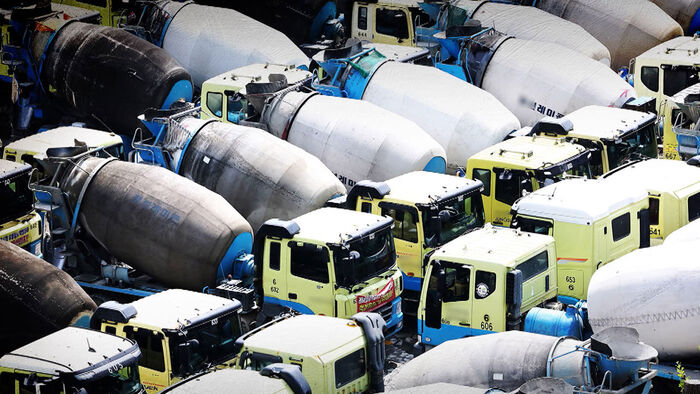
The strike by the ready-mix concrete transport union is at risk of becoming prolonged after members rejected a tentative agreement that included a raise in transport fees to 80,000 won per delivery.
According to the National Ready-Mix Concrete Transport Workers' Union on June 10, 68.3% of members voted against the tentative agreement reached with management the previous day, leading to its final rejection.
The labor and management sides had reached the tentative agreement during a mediation session that lasted from 2:00 p.m. to approximately 10:30 p.m. on June 9, proposing a 5.5% increase—or 4,200 won—raising the transport fee from the existing 75,800 won to 80,000 won.
However, as the union had initially demanded an increase of 8,000 won per delivery, it is reported that members felt the increase proposed in the agreement fell short of their expectations.
The union stated, "The rejection result, with 68% voting against it, reflects the reality of rising inflation, vehicle maintenance costs, and transport fees in the Seoul metropolitan area that are lower than those in other regions," adding, "We plan to intensify our struggle to secure a substantial increase that can guarantee the livelihood of our members."
With the rejection of the tentative agreement, the work stoppage by ready-mix concrete transport workers in the Seoul metropolitan area, which began at 8:00 a.m. on June 8, continues, making disruptions to construction site schedules inevitable.
Ready-mix concrete is a construction material produced by mixing cement, aggregate, and water in specific proportions, and it is used in most construction projects, including apartments, buildings, roads, and bridges.
As it is an essential material used in the concrete pouring process for building frames, any interruption in supply directly impacts construction schedules.
※ Please note: This article was translated by AI and may contain errors.
Ready-Mix Concrete Union Rejects Tentative Agreement for 4,200 Won Increase, Raising Concerns of Prolonged Strike
By Jeong Seong-jin | Jun 10, 2026