[Anchor]
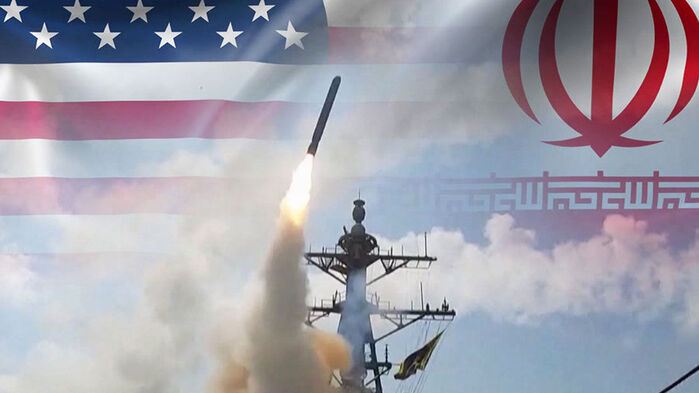
The United States and Iran have engaged in their most intense exchange of fire since a cease-fire took effect, following a retaliatory U.S. strike after a U.S. military helicopter crashed in the Strait of Hormuz. While the U.S. maintains that the incident will not significantly impact end-of-war negotiations, tensions in the Middle East are escalating.
Report by Park Won-kyung.
[Reporter]
A U.S. military Apache helicopter crashed while patrolling the Strait of Hormuz near Oman.
The two pilots, who were drifting at sea, were rescued by an unmanned surface vessel two hours later.
At approximately 1:40 a.m., President Trump announced that the helicopter had been shot down by Iran and declared that the U.S. would respond to the attack.
About four hours later, U.S. Central Command stated that, acting on President Trump's orders, it had conducted airstrikes against Iran in an act of self-defense.
The airstrikes were carried out in three waves, reportedly targeting air defense systems, radar stations, and two water supply facilities around the Strait of Hormuz, including in Bandar Abbas, Qeshm Island, and Sirik.
An hour and a half after the U.S. attack, Iran vowed not to tolerate any attacks or threats. Shortly thereafter, the Islamic Revolutionary Guard Corps announced that it had struck 21 locations, including the U.S. Navy's 5th Fleet base in Bahrain and the Al-Azraq Air Base in Jordan, using missiles and drones.
[Iranian News Anchor: Some U.S. bases in these regions have been hit by powerful attacks from the heroic Iranian military and the warriors of the Islamic Revolutionary Guard Corps.]
Following the exchange, the U.S. declared the operation concluded, and Iran is currently refraining from further retaliation.
However, tensions remain high, with reports of a skirmish between small boats and a cargo ship at the entrance to the Red Sea, an area controlled by the pro-Iranian Houthi rebels.
The Trump administration continues to claim that end-of-war negotiations with Iran are progressing well, though it cannot guarantee a timeline for a final deal.
[Vance / U.S. Vice President (Interview with CBS): We believe we are very close to reaching a deal. I think it could happen next week, or it could be months from now.]
The Financial Times assessed that President Trump is losing control over the situation in the Middle East, and that Iran and Israel are now determining the course of the war.
(Video Editing: Kim Jong-mi)
※ Please note: This article was translated by AI and may contain errors.
U.S. and Iran Clash in Strait of Hormuz, Casting Shadow Over Cease-fire Talks
Jun 11, 2026