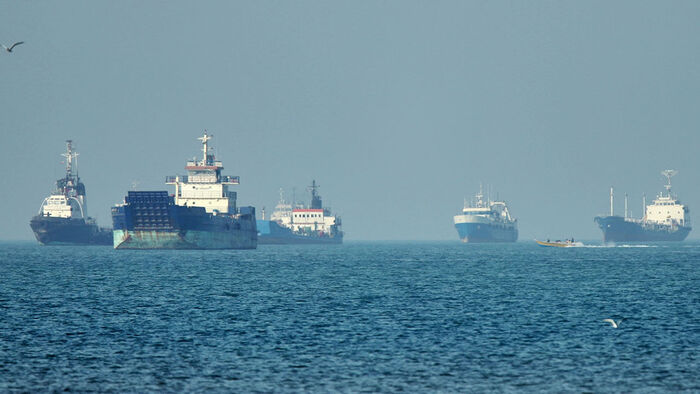
▲ Ships in the Strait of Hormuz
An increasing number of vessels attempting to pass through the Strait of Hormuz are using a dangerous route that hugs the Omani coastline, the British newspaper Financial Times reported on June 10 (local time).
According to sources cited by the newspaper, about 15 ships, mostly oil tankers, are navigating this route daily under U.S. air cover.
About two weeks ago, the U.S. established a system to provide air support for vessels attempting to transit the Strait of Hormuz via the Omani route.
Ships intending to use this passage are instructed to request permission from the U.S. Central Command.
It is reported that the command provides vessels with navigational coordinates, instructs them to turn off their Global Positioning System (GPS) signals and all other electronic devices, and advises them to transit under the cover of darkness.
Critics point out that the Omani route is difficult for large vessels to navigate and carries a risk of collision, as it is adjacent to massive rocky cliffs and, in some sections, is only 800 meters wide.
One oil tanker industry executive expressed concern, stating, "Having fully loaded ships navigating a single-lane route in both directions without proper maneuvering capability is like driving down a country road at night without your lights on."
Vessels passing through the vicinity without Iran's approval must also accept the risk of being targeted by Iranian drones or missiles.
President Trump stated that the U.S. military has been conducting a "secret operation" since last month to support the safe passage of commercial vessels in the Strait of Hormuz, and the New York Times reported that it believes these vessels are following a route close to Oman.
However, U.S. officials have not disclosed which ships are secretly passing through the Strait of Hormuz or what routes they have utilized.
※ Please note: This article was translated by AI and may contain errors.