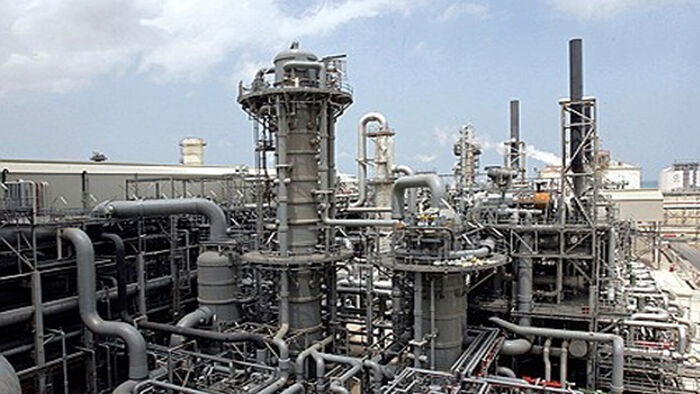
▲ Qatar's Ras Laffan gas facility
Qatar attempted a "secret deal" with Iran early in the war to protect its liquefied natural gas (LNG) production facilities from Iranian attacks, the Washington Post (WP) reported.
According to the report, when the war with Iran began in late February following attacks by the United States and Israel, Qatar contacted Iran and conveyed a proposal that it could voluntarily halt gas production on the condition that the Ras Laffan LNG facility would not be attacked.
Throughout this war, Iran has employed a strategy of driving up global energy prices by blocking the Strait of Hormuz, which accounts for one-fifth of the world's maritime energy transport, and targeting key energy facilities of Middle Eastern oil-producing nations.
This was aimed at pressuring the United States and Israel to end the war early, given that skyrocketing global energy prices deal a major blow to the economies of countries worldwide, including the U.S.
Qatar's Ras Laffan is the world's largest LNG production hub, accounting for about one-fifth of the global gas supply.
From Qatar's perspective, it was a situation where it had to protect a core asset of its national economy.
Middle East security officials reportedly believe that Qatar was effectively seeking a "secret agreement," conveying a message to Iran to the effect of, "Even if you do not attack us, your desired strategic effect can be achieved."
Qatar's attempt was reportedly detected through intelligence analysis, including communications intercepts.
However, Qatar reportedly did not receive a clear response from Iran regarding the proposal.
Nevertheless, considering the circumstances that unfolded afterward, the WP reported that there is a possibility of a certain level of tacit understanding between the two sides.
In fact, Qatar suspended operations at the Ras Laffan facility on the third day of the war.
At the time, Qatar explained this as a "measure due to the risk of military attacks," but the WP reported that satellite imagery analysis showed no signs of direct damage to the facility.
Qatar completely denies the allegations.
The Qatari government told the WP that the suspension of Ras Laffan was entirely a decision for facility safety and personnel protection, stating, "The claim that we made the decision in collusion with Iran, for Iran's benefit, or to influence the course of the war is absolutely not true."
Despite Qatar's behind-the-scenes contact efforts with Iran, Ras Laffan did not escape Iranian attacks.
After its own largest gas field, South Pars, suffered severe damage from Israeli airstrikes, Iran fired missiles at Ras Laffan on March 18 in retaliation, damaging some facilities and sending shockwaves through the international energy market.
At the time, Qatar announced that repairing the damage "will take 3 to 5 years."
In this war, Iran has continuously attacked Gulf nations, such as Qatar, that provide military bases to the United States.
Qatar argued that the allegations of a backroom deal with Iran are an attempt to undermine its efforts to mediate an end to the war and shake its strategic cooperative relationship with the United States.
Although U.S. officials were aware of Qatar's contact with Iran, it is understood that this did not cause an immediate rift in their mutual relations.
Qatar has maintained close relations with both the United States and Iran, and has been evaluated as having contributed to the progress of end-of-war negotiations between the two countries through active mediation during this war.
(Photo: AP, Yonhap News)
※ Please note: This article was translated by AI and may contain errors.