▲ Anthropic
With artificial intelligence (AI) company Anthropic recently releasing its top-tier AI models divided into general-use and security-specialized versions, the selective categorization of AI access rights is beginning in earnest.
On top of this, as the U.S. administration has stepped in to completely block foreign nationals from accessing these models, the debate over access to cutting-edge AI is expanding beyond the corporate level into an issue of export controls between nations.
While some view this as an inevitable measure for security, others interpret it as a symbolic case showing that the era in which cutting-edge AI is provided equally to everyone is coming to an end.
As a structure is formed where higher-performing and more influential AI is prioritized for verified institutions and organizations, prospects are being raised that the future landscape of AI competition may shift from "who built the superior AI" to "who is allowed to utilize that AI."
On June 9 (local time), Anthropic simultaneously unveiled "Claude Fable 5," a top-tier Mythos-family model adjusted for general users, and "Claude Mythos 5," a security-specialized model.
Although the two models use the same underlying technology, they differ in their scope of access and level of utilization.
Fable 5 is designed so that if sensitive queries related to cybersecurity or biological weapons are entered, a lower-tier model, "Opus 4.8," responds instead.
Anthropic explained that these safety guardrails are triggered in less than 5 percent of all use cases.
In contrast, the unrestricted Mythos 5 is provided only to institutions verified through "Project Glasswing," a select security consortium.
In South Korea, Samsung Electronics, SK Hynix, SK Telecom, and the Korea Internet & Security Agency (KISA) are reportedly set to secure access rights as the program expands.
However, Fable 5 was embroiled in controversy over excessive restrictions immediately after its release.
According to The Wall Street Journal (WSJ), there was a succession of cases where questions in basic science fields such as mathematics, biology, and chemistry were blocked. One immunologist revealed that they could not even type a simple greeting just because their previous conversation included biology-related content.
Ultimately, Anthropic apologized, stating, "We made the wrong trade-offs and did not strike the right balance."
On top of this, on June 12 (local time), the U.S. administration announced export control guidelines completely banning foreign nationals from accessing Fable 5 and Mythos 5, citing national security.
Foreign nationals residing in the U.S., as well as Anthropic's own foreign employees, were included in the restrictions, and Anthropic immediately suspended the services for all customers to comply with the regulations.
This measure can be seen as state power more forcefully redrawing the boundaries of access categorization that Anthropic had set for itself.
Separate from a company designing safety measures and selectively providing access to verified institutions, a new layer of control has begun to operate, with the government blocking access itself based on nationality.
Efforts to institutionally categorize AI access rights are also gaining momentum.
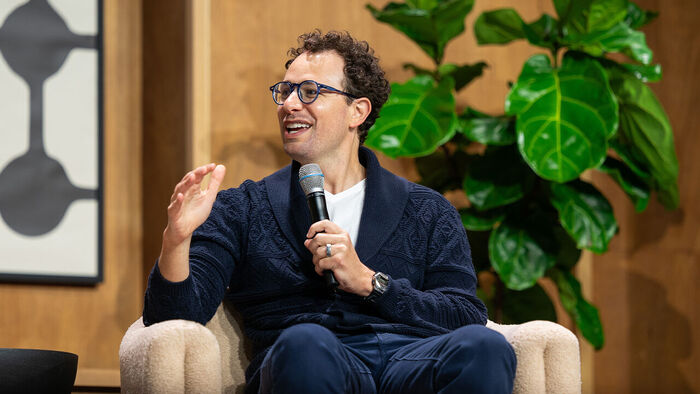
Anthropic Chief Executive Officer (CEO) Dario Amodei argued in a recently published essay that the U.S. Congress should mandate independent safety testing for top-tier AI models.
He also raised the need to establish an AI regulatory body similar to the U.S. Federal Aviation Administration (FAA).
This is a contrasting move to major Big Tech companies, which have historically called for deregulation, claiming it hinders technological innovation.
An AI development company itself has come forward to demand a robust pre-verification system.
Indeed, the U.S. government has already established guardrails requiring mandatory reporting of training results to the government for frontier AI models developed using computing resources above a certain threshold.
Behind this lies concern over the potential risks of AI models.
Regarding the reason for delaying the release of Mythos, CEO Amodei stated, "Among the early adopting companies, some even said, 'This is a super-powerful weapon. It's to the point where you need a gun license to use it.'"
Anthropic also warned, "Within the next 6 to 12 months, other AI companies will also secure Mythos-level performance," adding, "Some companies might release them without sufficient safety guardrails."
This suggests that the entire industry, going beyond the choice of a specific company, is likely to shift toward access control and safety verification frameworks.
However, a difference in temperature is emerging between corporations and the government regarding the direction and level of regulation.
Anthropic expressed its position on the latest export control measures, calling it "a problem arising from a misunderstanding."
While acknowledging the necessity of regulation itself, the company finds the method of this specific measure difficult to accept.
Presuming that the government seems to believe users can bypass Fable 5's safety measures through so-called "jailbreaking," Anthropic pointed out, "We believe the government should have the authority to block the deployment of unsafe AI through transparent, fair, and legally grounded processes based on technical facts, but this measure does not align with those principles."
Prospects suggest that as AI access rights become more segmented, the technological gap could become even more pronounced.
The so-called "AI Divide" phenomenon, driven by the pricing policies of AI developers, is already becoming a reality.
According to a recent analysis of the "2024 Survey on the Internet Usage" by Choi Hang-sub, a sociology professor at Kookmin University, the generative AI usage rate among households with a monthly income of 5 million won or more was 38.7 percent, which is 3.2 times higher than that of households with a monthly income of less than 2 million won (12.1 percent).
By education level, the rate for those with a college degree or higher (44.0 percent) was more than double that of those with a primary school education or less (20.1 percent).
In the future, the key criterion determining access to top-tier AI is highly likely to be security capability rather than simple cost.
Indeed, when about 50 early participating institutions of Project Glasswing conducted security checks using Mythos, more than 10,000 security flaws rated "high" or "critical" in severity were reportedly discovered in just a few weeks.
However, providing Mythos 5 only to verified institutions like Glasswing means that organizations lacking sufficient security frameworks and response capabilities could find themselves at a disadvantage in the competition to utilize cutting-edge AI.
In fact, according to a recent report by Gartner, which surveyed 286 security and infrastructure decision-makers at companies with annual revenues of $50 million or more, as of 2024, less than 10 percent of security architects reported to the Enterprise Architecture (EA) organization, and 17 percent of companies had no dedicated security architecture organization at all.
Analysis suggests that if a structure where access rights to top-tier AI models are determined by security verification or contractual relationships takes hold in the future, the influence wielded by AI providers could become far greater than it is now.
This sense of crisis is stimulating competition for AI self-reliance at the national level, moving beyond individual corporations.
There is a growing awareness of the need to reduce reliance on foreign AI and secure domestic AI capabilities in national security, defense, and public sectors.
South Korea is no exception.
Centered on the "Independent AI Foundation Model (Dokpamo)" project, the government is promoting localization and self-reliance across the entire ecosystem, including Large Language Models (LLMs), AI semiconductors, physical AI, and AI infrastructure.
An AI industry official said, "Top-tier AI is changing in nature from a simple technology to a core infrastructure that determines the competitiveness of nations and corporations," adding, "In the future, we will enter an era where who has access to that AI is more important than who built a better AI."
※ Please note: This article was translated by AI and may contain errors.