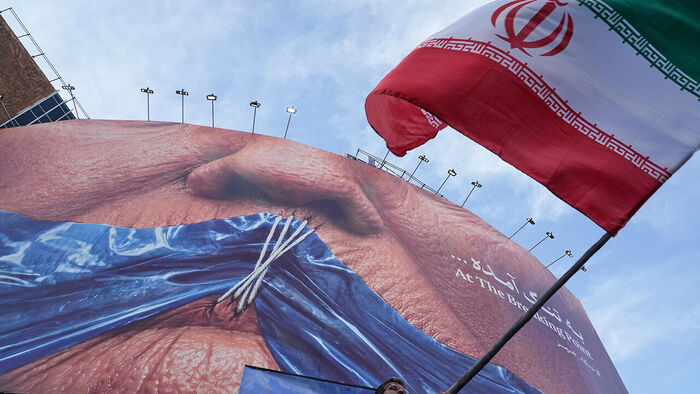
▲ Tehran, the capital of Iran
As the United States and Iran agreed to sign a memorandum of understanding (MOU) aimed at ending the war on June 14 (local time), the situation in the Middle East, which had been on thin ice amid a precarious truce, reached a dramatic turning point.
Iran, which was unilaterally pushed back in the early stages of the war by the formidable military power of the "superpower" United States and Israel, had resisted more resiliently than expected by putting forward the card of blocking the Strait of Hormuz.
However, the economic ruin caused by the U.S.'s full-scale naval blockade, the extreme military and economic burden of resuming war against the world's strongest military power, and the domestic public sentiment on the verge of explosion appear to have ultimately led the hardline Iranian leadership to the negotiating table.
Shocked by the loss of even its supreme leader in massive airstrikes by the U.S. and Israel, Iran burned its bridges by controlling the Strait of Hormuz, the main artery of global oil transport.
The impact of the Hormuz blockade was significant.
Immediately after the outbreak of the war, as the threat of full control over the Strait of Hormuz became a reality, international energy and financial markets briefly fell into a panic.
In particular, the global economy, including Asian countries highly dependent on Middle Eastern oil, took a direct hit, followed by a domino effect of supply chain disruptions and financial market contraction.
But the weapon of the Hormuz blockade also returned as a boomerang.
In response to Iran's control of the strait, the United States played the card of a full naval blockade against Iran in mid-May.
The U.S. naval blockade dealt a massive shockwave to the Iranian economy, which was already in its worst state.
The value of the Iranian rial, the country's legal tender, plummeted to a record low of 1.8 million rials per dollar on the black market in late May.
Amid the plunge in the value of the rial, the officially announced annual inflation rate exceeds 50 percent.
People's livelihoods have collapsed so miserably that they have to purchase even daily necessities such as groceries, detergents, and hygiene products, not to mention home appliances, in installments.
On top of this, with crude oil exports, which account for the vast majority of national fiscal revenue, also paralyzed, experts generally assess that Iran's economic situation was sinking into an irrecoverable swamp.
Fear of resuming a full-scale war also appears to be a major factor that influenced the decision of the Iranian leadership.
In the early stages of the war, Iran lost its core leadership, including then-Supreme Leader Ayatollah Ali Khamenei, and its major cities and air defense networks were virtually devastated amid fierce airstrikes.
Although Iran reorganized its military forces during the truce, its pro-Iranian proxy groups, including the Lebanese armed group Hezbollah, had suffered such devastating blows that recovery was virtually impossible. Under these circumstances, if the barrage of airstrikes by the U.S. and Israel, backed by overwhelming air power, were to resume, the very survival of the regime could not be guaranteed.
This fear appears to have resurfaced when the U.S. launched massive airstrikes on Iran for two days following the downing of a U.S. Army Apache helicopter on June 8, as the peace talks were entering their final stages.
Above all, the U.S. threat to devastate key national infrastructure, such as the crude oil terminal on Kharg Island, which handles 90 percent of Iran's oil exports, acted as an unbearable pressure.
Immediately after the recent two days of massive airstrikes, U.S. President Donald Trump threatened to seize Iran's oil infrastructure hubs, including Kharg Island, which added to this pressure.
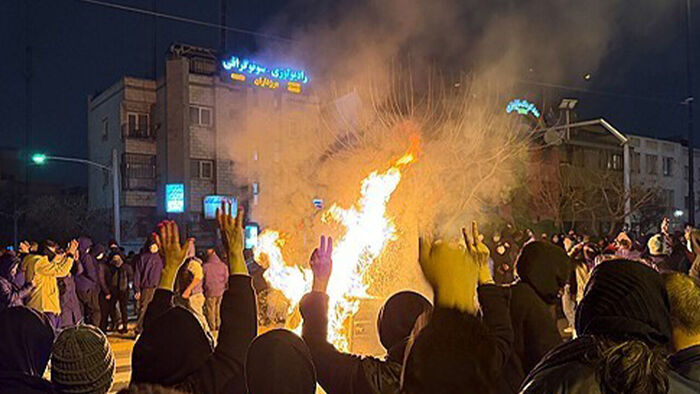
The boiling public sentiment amid the ongoing economic difficulties and war also pressured the Iranian leadership like a "ticking time bomb."
During the war, the Iranian regime barely suppressed public sentiment through anti-American sentiment and fear, organizing large-scale state-controlled rallies to shout "Down with the U.S." and executing the leaders of the popular uprising in January of this year.
However, the prevailing view is that anger toward the regime was gradually heading toward a critical point amid the prolonged war and murderous cost of living.
If the peace agreement failed and massive airstrikes by the U.S. and Israel resumed, there would have been concerns that the suppressed anger of the citizens could lead to large-scale riots again.
In addition, the explicit expression of dissatisfaction by neighboring Gulf countries, which were caught in the crossfire during Iran's retaliatory attacks, and deepening diplomatic isolation also narrowed the leadership's room for maneuver.
Ultimately, with the political, economic, and diplomatic burdens reaching their limits due to the prolonged war, the Iranian leadership appears to have chosen a compromise with the United States for the survival of the regime.
The Iranian government's active demands during the peace negotiations for the partial release of frozen overseas assets and the temporary lifting of sanctions on its oil, gas, and petrochemical products are also not unrelated to this background.
Therefore, if the agreement is implemented smoothly and the additional 60 days of nuclear talks progress well, these measures are expected to provide breathing room for the Iranian economy, which is on the verge of collapse.
(Photo: AP, Yonhap News)
※ Please note: This article was translated by AI and may contain errors.