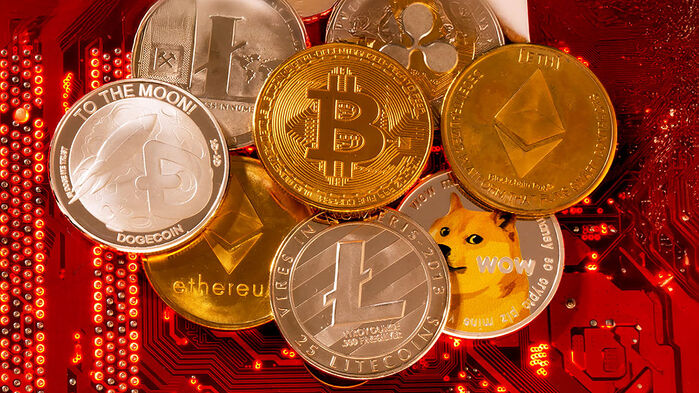
▲ Cryptocurrency
The Financial Supervisory Service (FSS) has issued a warning to investors regarding decentralized exchanges (DEXs), urging caution following a series of "meme coin" (viral cryptocurrency) scams fueled by false information.
A decentralized exchange is a platform where transactions occur directly between users without a central governing entity.
Unlike centralized exchanges (CEXs), DEXs have low barriers to entry as they do not require Know Your Customer (KYC) verification or listing review processes.
However, because anyone can easily issue a coin, these platforms have become hotbeds for "rug pull" scams—where developers collect investment funds and then dump their holdings after artificially inflating the price—and other coin-related crimes.
In fact, a group was indicted by the prosecution last May for swindling 900 million won from 256 investors by artificially pumping up the price of a meme coin and then selling off their holdings all at once.
The FSS advised, "Rug pull scams often occur in the early stages of a DEX listing and frequently utilize social media," adding, "Investors must verify basic coin information and carefully check risk indicators, such as the concentration of holdings among top wallet addresses."
The agency further cautioned, "Since there are cases where follower counts are manipulated and even official social media accounts are faked, investors should not blindly trust promotions by 'finfluencers' (financial influencers) on social media."
Furthermore, the FSS explained that the recent popularization of coin issuance platforms has led to tens of thousands of meme coins being created every day without the need for coding skills.
While the number of coin types traded surged to 20 million last year, 53.2% of them have already ceased trading.
Accordingly, the FSS emphasized that when investing in meme coins, investors must thoroughly verify the coin they intend to purchase by checking its contract address (CA), which is the unique identifier for a specific coin.
Investors should also be wary of extreme price volatility caused by a lack of liquidity.
Because prices on decentralized exchanges are determined automatically based on the ratio of assets in a liquidity pool, "slippage"—where a trade is executed at a less favorable price than expected—can occur, leading to financial losses.
The FSS advised investors to check the size of the liquidity pool and whether the coin is listed on other exchanges before investing, and to set appropriate slippage tolerance levels.
Additionally, since decentralized exchanges operate solely through automated code without an operating entity, it is virtually impossible to seek compensation for damages in the event of hacking or asset theft, as there is no responsible party to hold accountable.
The FSS recommended that users revoke transaction approval permissions for wallets that are not frequently used and separate wallets into those for long-term holding and those for short-term trading.
Meanwhile, the FSS is strengthening its monitoring of unfair trading practices by introducing an artificial intelligence (AI)-based abnormal transaction detection and analysis system.
The FSS stated, "Specific tips are crucial for proving allegations in social media-based scams," adding, "If you discover circumstances involving market manipulation, such as purchasing a coin in advance and then spreading false information to drive up the price, please actively report it."
※ Please note: This article was translated by AI and may contain errors.