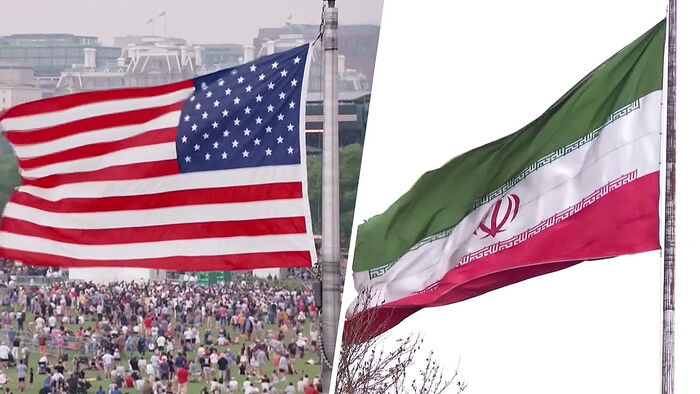
▲ U.S.-Iran Peace Agreement Concluded
With the conclusion of peace negotiations between the United States and Iran on June 14 (U.S. time), effectively ending the war in Iran 106 days after it began, attention is now turning to the "balance sheet" of gains and losses for both nations.
While both sides claim to be the "winner," both countries have also suffered significant losses in this war.
For President Donald Trump, the war serves as a firm reminder of his resolve not to tolerate a nuclear-armed Iran, following air strikes on Iranian nuclear facilities in June last year that pushed back Iran's nuclear development timeline.
Of course, the prevailing view is that it remains to be seen whether the eventual denuclearization agreement to be reached through upcoming formal negotiations will be a step forward compared to the Joint Comprehensive Plan of Action (JCPOA) agreed upon during the Barack Obama administration.
Nevertheless, if agreements such as the disposal of 440 kilograms of highly enriched uranium (HEU) held by Iran and a suspension of uranium enrichment for 15 or 20 years are implemented—as President Trump recently stated—it could be regarded as a security "achievement" for the United States.
In addition, significantly weakening the conventional military power of hostile Iran, including destroying a substantial portion of its warships, is evaluated to have made a non-negligible contribution to the security of the U.S. and its allies in the Middle East, particularly Israel.
This point is also why some evaluate Israel as the "biggest winner" of this war.
However, critics point out that it is uncertain whether this war, which lasted for over 100 days including the ceasefire period, has made the U.S. and its Gulf allies safer in the long run.
Given that the U.S. military focused on "decapitation strikes" to eliminate the Iranian leadership early in the war, starting with Iran's Supreme Leader Ayatollah Seyyed Ali Khamenei on the first day of the conflict on February 28, President Trump appears to have inwardly kept regime change in Iran as one of his primary war objectives.
However, Mojtaba Khamenei, the son of the killed Supreme Leader, succeeded his father, and some evaluate that Iran's theocratic regime is not only outwardly intact but has actually grown more hardline.
While the war eliminated Iran's old leadership, it did not lead to a true "regime change" that would force Iran to abandon its hostile policies toward the U.S. and Israel.
On the contrary, there are assessments that the war has strengthened the "voice" of young hardliners in Iran united by nationalist sentiment, while drowning out the voices of ordinary citizens who have resisted the regime.
Above all, turning Iran's "strategic weaponization" of the Strait of Hormuz—which had previously existed only in theory—into reality can be seen as a major "loss" for the United States.
The fact that Iran succeeded in taking the global economy hostage by blocking the Strait of Hormuz, thereby overcoming its absolute military inferiority to some extent, was a painful blow to President Trump, who had aimed for an early victory.
At the same time, the fact that U.S. allies and partners in the Gulf region, such as Qatar and the United Arab Emirates (UAE), suffered retaliatory attacks from Iran also poses a burden for the U.S. and President Trump in terms of managing alliances in the Middle East.
On the other hand, Iran can likely view its ability to withstand more than 100 days of onslaught by the world's superpower, the United States, and the Middle Eastern powerhouse, Israel, as an "achievement" in terms of confirming its presence and status within the anti-U.S. bloc.
Furthermore, confirming the leverage of blocking the Strait of Hormuz is highly likely to be considered a "harvest" for Iran's hardline regime, proportional to the scale of the negative impact it had on the U.S. and the international community.
However, there are also strong views that Iran's indiscriminate attacks on neighboring Arab nations like the UAE and Qatar under the pretext of "retaliatory strikes" on U.S. military bases in the Middle East after being attacked by the U.S. and Israel, along with blocking the Strait of Hormuz—which handles about 20% of global energy transit—could lead to Iran's self-imposed international isolation in the long run.
In particular, there is a possibility that domestic anti-government sentiment, which had been suppressed following the bloody crackdown on protesters and under the pretext of war against external enemies like the U.S. and Israel, could resurface after the end of the war.
Questions are being raised through this war about whether the Iranian theocratic regime's practice of spending a significant portion of state finances to support proxy forces such as Hezbollah (Lebanon), the Houthi rebels (Yemen), and Hamas (Palestine)—while forcing its own citizens to suffer direct war damage and the pain of international sanctions—is permanently sustainable.
Of course, some cautious voices suggest that the true gains and losses of both countries in this war can only be fully evaluated in the future, depending on the outcome of upcoming nuclear negotiations, the restructuring of the Middle East security landscape including post-war U.S.-Iran relations, and changes in the relationship between the Iranian leadership and its citizens.
※ Please note: This article was translated by AI and may contain errors.