[Anchor]
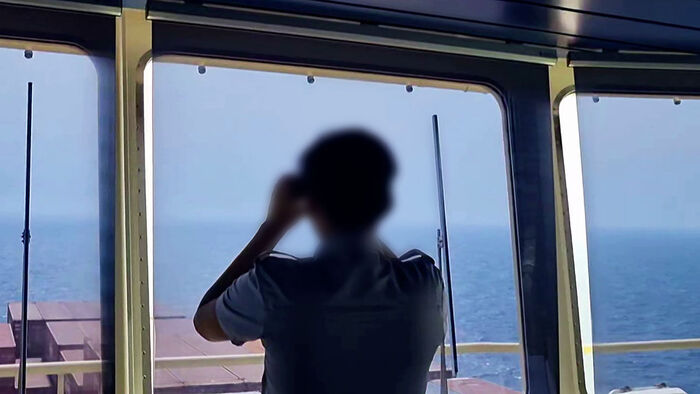
South Korean vessels and crew members stranded in the Strait of Hormuz are monitoring the situation closely with a sense of caution. Due to a history of agreements, collapses, and reversals, some are taking a wait-and-see approach, while others are rushing to prepare for departure, fearing they might miss this opportunity.
Jeong Seong-jin reports.
[Reporter]
Despite the news that the U.S. and Iran have reached an agreement to end the war, South Korean crew members stranded in the Strait of Hormuz remain skeptical.
[Jeon Jeong-geun / Chairman of the HMM Seafarers' Union: We are hopeful, but we aren't getting too excited. We want to believe it, but since it might not go through again, we are preparing ourselves mentally.]
Back in April, the Strait of Hormuz was opened following a ceasefire agreement, but it was later re-blocked by Iran, followed by a counter-blockade from the U.S. As a result, there is a cautious atmosphere until a final agreement is reached.
At the outbreak of the war, there were 26 South Korean vessels in the Strait of Hormuz. With the departure of an HMM oil tanker and an SK Shipping LNG carrier, 24 vessels and 137 South Korean crew members remain.
Since the attack on the Namu-ho, most South Korean ships have moved to areas near Qatar inside the Strait and are waiting.
They are currently waiting for government instructions while remaining in safe areas and completing preparations for passage until the agreement on the 19th.
[Company A: We are checking all relevant matters on board once again. We are preparing to move as soon as the order is given...]
Some shipping companies are demanding active measures from the government, stating they cannot afford to miss this opportunity as they have already been pushed to their limits.
[Company B: We can't wait any longer. We are running out of fuel, and the crew is very agitated... Since Israel continues to engage in local skirmishes, we don't know what other variables might arise.]
The government stated that it is preparing for the vessels to exit as quickly as possible, but clarified that ensuring safety, such as mine clearance and securing escape routes, remains the top priority.
(Video Editing: Kim Byeong-jik)
※ Please note: This article was translated by AI and may contain errors.
"Still Skeptical" vs. "Preparing Anyway"... Tense Atmosphere as Situation Monitored
By Jeong Seong-jin | Jun 15, 2026