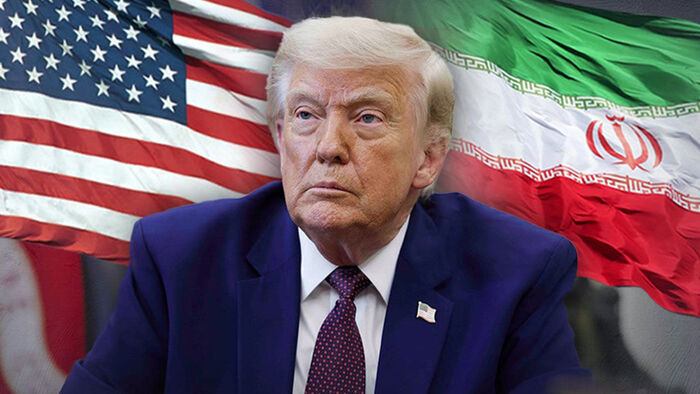
▲ US President Donald Trump
Following the announcement of a peace agreement between the United States and Iran, U.S. experts pointed out on Monday (local time) that key issues regarding the operation of the Strait of Hormuz, Iran's abandonment of its nuclear program, and the easing of sanctions on Iran remain unresolved.
Although both sides have agreed to sign a memorandum of understanding (MOU) to end the war and hold a signing ceremony on June 19, outlooks suggest that how the two sides resolve these issues through follow-up negotiations will ultimately determine the success or failure of the peace agreement.
Nate Swanson, a resident senior fellow and director of the Iran Strategy Project at the Atlantic Council's Scowcroft Middle East Security Initiative, noted in a commentary on Monday that "an MOU without a follow-on agreement is fragile," pointing out that there could be a significant gap between the goals outlined in the MOU and the final agreement.
While Swanson positively assessed that the MOU would temporarily halt armed conflict, increase maritime traffic in the Strait of Hormuz, and buy time for the parties to work out the details, he said, "The core issues regarding the operation of the Strait of Hormuz, Iran's nuclear concessions, and financial incentives and sanctions relief for Iran appear to remain unresolved."
He also pointed out that structural factors exist within the United States, Iran, and Israel that will make follow-up negotiations difficult.
The United States has so far failed to demonstrate the patience required to finalize a complex nuclear deal that includes a new monitoring and verification regime, and Iran is also highly likely to demand concessions at a level unacceptable to the U.S. and Israel, making a final agreement difficult to reach.
He also predicted that if Israel deems the deal contrary to its security interests, it could exert political and diplomatic influence to block or effectively neutralize the agreement.
Some also pointed out that this war with Iran was ultimately a "strategic failure" for the Trump administration.
Victoria Taylor, director of the Iraq Initiative at the Atlantic Council, said of the U.S.-Iran agreement, "The outcome may be no better than what could have been achieved had the United States pursued diplomacy rather than war in the first place."
Taylor pointed out that although the Trump administration weakened Iran's military capabilities and eliminated key Iranian leaders, it failed to achieve its original goal of regime change and instead strengthened the position of hardliners.
She added, "Iran has proven that blocking the Strait of Hormuz can cause major disruptions to the global economy," predicting that Iran will use its ability to block the strait as a powerful weapon and leverage in the future.
She also projected, "While there is a possibility that this ceasefire could lead to a more permanent agreement, it is more likely to remain a temporary and fragile deal."
Regarding the reopening of the Strait of Hormuz, some experts predicted that a rapid normalization of the energy market is unlikely.
Landon Derentz, vice president for energy and infrastructure at the Atlantic Council, said, "Energy markets operate on certainty," adding, "Stability cannot be built overnight, and global inventory levels are at their lowest in years."
He predicted that the geopolitical risk premium reflected in oil prices will remain for the time being due to deep distrust between the parties and the aftermath of supply disruptions, saying, "It will take time to return to normal."
The Council on Foreign Relations (CFR) predicted in a report on June 12 that the sequencing of unfreezing Iranian funds and easing sanctions would be one of the key issues going forward.
The CFR noted that while the United States maintains that Iranian assets must remain frozen until certain criteria are met, Iran, which is suffering from economic difficulties, needs immediate sanctions relief and assistance, stating that "neither side is showing flexibility."
It also expected that whether to limit Iran's military capabilities, such as its missile program, whether Iran will continue its support for pro-Iranian militant groups like Hezbollah, and Israel's attacks on Lebanon targeting Hezbollah will also be key points of contention in future negotiations.
※ Please note: This article was translated by AI and may contain errors.