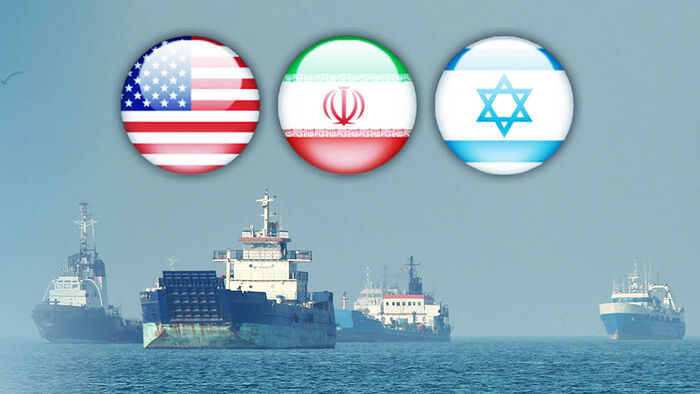
[Anchor]
President Trump stated that the agreement with Iran would be made public after the signing ceremony, but it remains unclear how much has actually been agreed upon, as both sides are telling different stories. Their positions are diametrically opposed regarding whether Iran will be allowed to collect transit fees in the Strait of Hormuz, and the most critical and sensitive issue—the Iranian nuclear deal—also appears to face a difficult path to a final agreement.
Reporter Je Hee-won has the story.
[Reporter]
U.S. President Donald Trump has repeatedly emphasized that under this agreement, passage through the Strait of Hormuz will be completely free of charge.
On the other hand, Iran's Fars News Agency reported that Iran's right to collect transit fees for the Strait of Hormuz has been recognized.
The point of contention is whether merchant ships can move freely through the Strait of Hormuz without additional costs, as they did before the war.
Iran interprets the agreement as allowing free passage for vessels for only 60 days, after which it can collect fees, meaning the spark of conflict surrounding the Strait of Hormuz remains alive.
Iran declared that this agreement would lead to a permanent cessation of hostilities on all fronts, including in Lebanon, the stronghold of the pro-Iranian militant group Hezbollah.
(Esmaeil Baghaei / Spokesperson for the Iranian Ministry of Foreign Affairs: The United States must fulfill the commitments it made under the memorandum of understanding and must also ensure that it carries out its relevant obligations regarding the cessation of the war in Lebanon.)
Israel's calculations have also become complicated.
There is significant speculation that Prime Minister Benjamin Netanyahu, who has leveraged his close relationship with President Trump as a political asset, will not easily accept the results of this agreement.
Israeli Prime Minister Netanyahu declared that while the war has effectively ended with the conclusion of the ceasefire negotiations and the immediate nuclear threat has been removed, the fight against Iran and its proxy forces is not yet over.
He added, "We will maintain troops in buffer zones in southern Lebanon, Syria, and the Gaza Strip for as long as necessary."
With a general election approaching in October, Prime Minister Netanyahu is expected to face attacks from both hardliners within his own camp and the opposition following the end of the war.
(Video Editing: Jo Mu-hwan)
※ Please note: This article was translated by AI and may contain errors.
"Paid vs. Free": Disagreement Over Hormuz; Israel to Maintain Presence in Lebanon
Jun 16, 2026