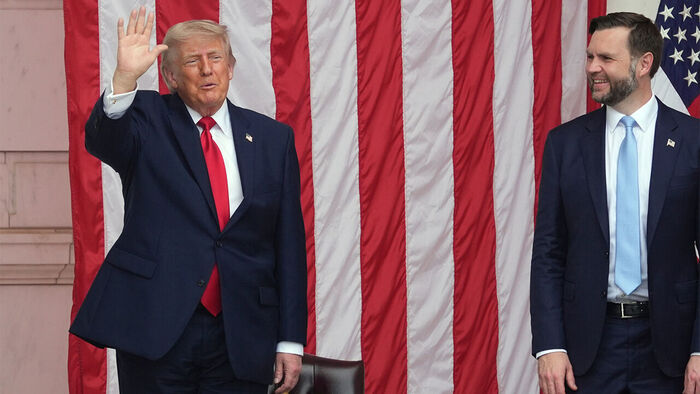
▲ President Trump and Vice President Vance
U.S. President Donald Trump, Vice President JD Vance, and Iranian Parliament Speaker Mohammad Bagher Qalibaf have reportedly already signed a ceasefire memorandum of understanding (MOU).
The electronic signing took place ahead of the formal signing ceremony in Geneva, Switzerland.
The U.S. side also acknowledged that the issue of toll fees in the Strait of Hormuz remains unresolved.
According to a media interview on June 15 (local time) with Vice President JD Vance, the chief U.S. negotiator with Iran, and briefings by senior U.S. administration officials, the electronic signing took place on June 14, the day the U.S. and Iran announced the conclusion of the ceasefire MOU.
President Trump and Vice President Vance participated from the U.S. side, while Speaker Qalibaf, who served as the chief negotiator with the U.S., participated from the Iranian side.
Separately, a formal signing ceremony is scheduled to be held in Geneva on June 19, with Vice President Vance and Speaker Qalibaf in attendance.
A senior U.S. official stated that it is not unusual that Iran's Supreme Leader Ayatollah Seyyed Mojtaba Khamenei did not sign the document.
The official noted that the Supreme Leader also did not sign during the Barack Obama administration's Iran nuclear deal.
Amid rising skepticism over why the agreement has not been made public despite the announcement of the MOU's conclusion in the U.S., a senior U.S. official said the text of the agreement is expected to be released within 24 to 48 hours.
President Trump said it would be released after the signing ceremony on June 19.
In an interview with CNN, Vice President Vance explained, "The MOU is one and a half pages long," describing it as a "very general document."
He added, "We will have to find a way forward on many of these issues in the technical negotiations phase, but this MOU provides a framework for Iran to enjoy the benefits of the agreement by fulfilling its obligations under it."
Ultimately, this MOU is interpreted as containing a broad framework, including the principle of "action-for-action"—providing benefits such as sanctions relief in exchange for denuclearization measures to be implemented by Iran. It suggests that specific details, such as how to link Iran's denuclearization steps with corresponding measures, will be left to upcoming technical negotiations.
Furthermore, the U.S. acknowledged that the issue of toll fees in the Strait of Hormuz remains unresolved despite the signing of the MOU.
A senior U.S. official said vessel traffic in the Strait of Hormuz is expected to increase significantly, noting that the MOU stipulates the strait will be open without tolls for 60 days.
Vice President Vance said, "We hope the Strait of Hormuz will be open without tolls in the long term. We will work this out in future technical negotiations."
Contrary to U.S. President Donald Trump's claim that toll fees in the Strait of Hormuz will be permanently waived, Iran plans to collect fees under the guise of providing maritime services after the 60 days of negotiations.
Regarding Iran's commitment to give up its nuclear program, Vice President Vance said, "They know we want a verifiable, long-term commitment that they will not develop or acquire nuclear weapons," adding, "We have included that in this agreement."
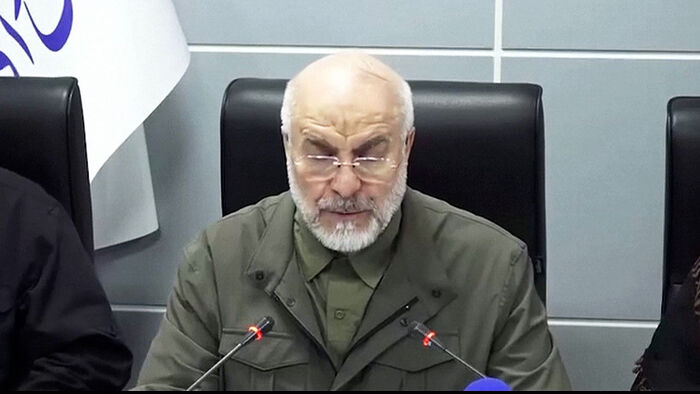
While making it clear that there will be no release of frozen assets or sanctions relief in exchange for signing the MOU, the U.S. expressed readiness to provide economic compensation, calling on Iran for "small gestures."
Vice President Vance said, "No money has been paid, and this will not change," adding that sanctions relief could begin if Iran takes steps such as eliminating enriched uranium or allowing a verification system.
He emphasized, "It is true that there is a very big opportunity for Iran. However, they can only enjoy the benefits of that opportunity if they actually do what they promised."
A senior U.S. official also noted that the U.S. and Iran are in the early stages of building trust, saying, "The U.S. is ready to release frozen funds and lift sanctions."
The official added, "If they make some small gestures showing their willingness to fulfill their commitments, we will also make some small gestures early on."
While Iran insists that some of its frozen funds must be released before it can enter the 60-day nuclear negotiations, the U.S. has shown a willingness to respond with conciliatory measures, effectively preventing the gap in positions from widening.
In addition, a U.S. official stated that Israel's withdrawal from Lebanon is not part of the MOU agreement.
This appears to be aimed at appeasing Israel, which is displeased with the agreement between the U.S. and Iran. However, along with the Hormuz tolls and the release of frozen assets, the issue of Israel's withdrawal from Lebanon could also act as a factor threatening the implementation of the MOU depending on the situation.
The U.S. reportedly plans to maintain its military forces in the Middle East during the nuclear negotiations with Iran following the signing of the MOU, and then reduce troop levels once a final agreement is reached.
(Photo: AP, Yonhap News)
※ Please note: This article was translated by AI and may contain errors.