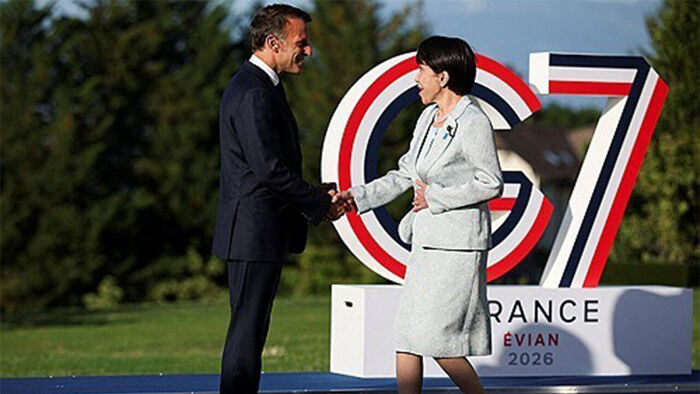
▲ French President Emmanuel Macron and Japanese Prime Minister Sanae Takaichi (right)
Following the ceasefire agreement between the United States and Iran, the Japanese government is deliberating on how to contribute to ensuring safe navigation in the Strait of Hormuz.
According to reports from the Yomiuri Shimbun and Mainichi Shimbun on June 16, there is growing pressure both domestically and internationally for Japan to join global efforts to ensure maritime safety, with the deployment of the Maritime Self-Defense Force (MSDF) for mine-sweeping operations being discussed.
However, strong caution remains within the Japanese government due to constraints under its pacifist constitution, which renounces war and prohibits the possession of war potential and the right of belligerency, as well as uncertainties surrounding the ceasefire.
Japanese Prime Minister Sanae Takaichi expressed her intention on June 15 while visiting Rome to join a joint statement on the Strait of Hormuz issued by the leaders of four European nations: the United Kingdom, France, Germany, and Italy.
This decision reflects a sense of urgency in Japan, which relies on the strait for the vast majority of its crude oil imports, making it difficult for Tokyo to remain on the sidelines of international efforts.
Proponents of active involvement within the Japanese government argue that the country should utilize the superior capabilities of the MSDF, which successfully cleared mines in the Persian Gulf after the end of the Gulf War in 1991.
Among key figures in the administration, there is already talk of the possibility of recruiting personnel for a potential deployment, with calls for a full-scale review of the plan.
On the other hand, there is strong opposition from those who point to the legal limitations under Article 9 of the pacifist constitution and the uncertainty of the regional situation.
The concern is that if hostilities resume while Japan is engaged in mine-sweeping operations before a complete ceasefire is established, it could be perceived as an act of force against another nation.
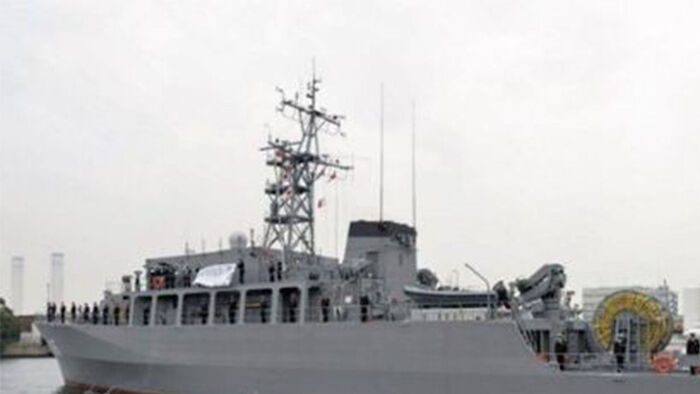
Key officials from the Ministry of Foreign Affairs and the Ministry of Defense are drawing a line, emphasizing that Japan’s standards for the use of force are much stricter than those of other countries, and that clear safety and evidence of the inability of merchant ships to pass must be confirmed first.
Practical constraints, such as the significant time required to deploy naval vessels, also serve as obstacles.
Accordingly, the Japanese government plans to carefully coordinate potential support measures while monitoring the specific details of the U.S.-Iran agreement scheduled for signing on June 19, as well as discussions at the upcoming G7 summit.
(Photo: AP, Provided by Japan Maritime Self-Defense Force, Yonhap News)
※ Please note: This article was translated by AI and may contain errors.