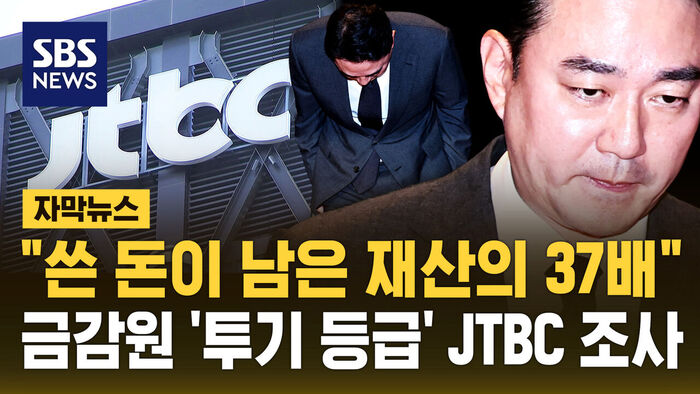
As key affiliates of the JoongAng Group, including JTBC, have filed for court receivership due to a liquidity crisis, financial authorities are investigating whether corporate bonds and electronic short-term bonds issued by JTBC were sold improperly.
According to financial authorities, the Financial Supervisory Service (FSS) is focusing on whether there was any mis-selling, specifically examining the adequacy of due diligence by the underwriters and whether there was a failure to disclose financial risks during the issuance of JTBC's corporate bonds and electronic short-term bonds.
The investigation covers corporate bonds, electronic short-term bonds, and commercial paper issued by JTBC last year and this year.
According to the 2025 business report submitted by JTBC to the FSS, the company issued a total of 259 billion won in corporate bonds, electronic short-term bonds, and commercial paper last year.
Furthermore, JTBC issued an additional 93 billion won in unsecured public bonds in February of this year, just four months before its key affiliates filed for rehabilitation.
The FSS is focusing on whether the securities firms involved sufficiently verified JTBC's financial situation and the liquidity risks of the group as a whole at the time of issuance, and whether they properly explained these risks to investors.
According to the business report, as of the end of last year, JTBC's accumulated deficit on a consolidated basis stood at 703.3 billion won, while its total equity was only 19 billion won.
This indicates a severe situation where the money spent on operations was 37 times greater than the company's remaining assets.
If JTBC or the underwriters were aware of the possibility of a rapid deterioration in the company's finances or the risk of entering rehabilitation proceedings but failed to properly disclose this in the investment prospectus, or if they downplayed the risks to attract investors, it could constitute mis-selling.
In particular, asset-backed electronic short-term bonds have been identified as a direct cause of the current liquidity crisis, a structure similar to that of Homeplus, which also underwent corporate rehabilitation.
JTBC failed to repay a total of 20.6 billion won in asset-backed loans—5.6 billion won from Miru Second and 15 billion won from Jeil JTBC Second, both special purpose vehicles—upon maturity. Consequently, its long-term credit rating plummeted from BBB to CCC, and its short-term rating fell from A3 to C, reaching speculative grade levels and triggering the liquidity crisis.
Asset-backed electronic short-term bonds are a method where a company transfers its assets or receivables to a special purpose vehicle, which then issues short-term bonds based on those underlying assets to raise funds from investors.
It is a structure that secures cash by bringing forward future cash flows through a type of "paper company."
In addition to the 20.6 billion won that matured on June 12, more loans worth tens of billions of won were scheduled to mature next month, but repayment procedures are expected to be effectively halted due to the commencement of rehabilitation proceedings.
Reported by Kim Minjeong | Video by Ahn Jun-hyeok | Graphics by Lee Soo-min | Produced by SBS Digital News
※ Please note: This article was translated by AI and may contain errors.
Financial Supervisory Service Investigates JTBC Over 'Speculative Grade' Bonds Amid Liquidity Crisis
By Kim Minjeong | Jun 16, 2026