[Anchor]
Today (June 16), the temperature in Seoul climbed to 33.2°C (92°F), breaking the record for the highest temperature of the year just one day after it was set. The mid-summer heat, with temperatures exceeding 30°C (86°F), is forecast to continue throughout this week. If this trend persists, projections indicate that most regions across the country will transform into a subtropical climate by the latter half of the 21st century.
Reporter Jeong Gu-hui has the story.
[Reporter]
Inside a greenhouse in Yongin, Gyeonggi-do.
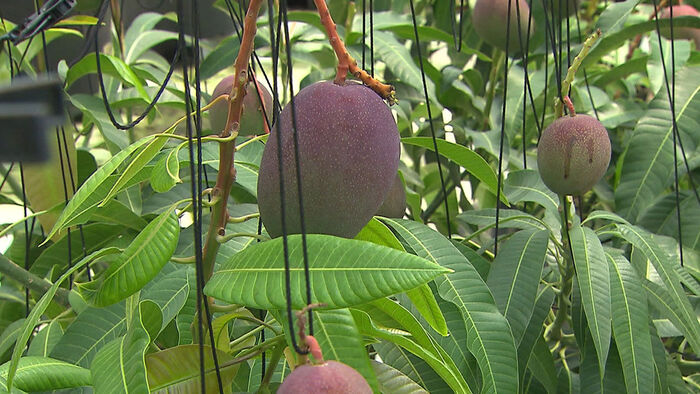
Red fruits larger than an adult's fist are growing. These are apple mangoes, a tropical or subtropical crop.
They are scheduled to be harvested in a month, and their sugar content is as high as that of imported varieties.
[Kwon Mi-na / Head of Technology Support, Yongin Agricultural Technology Center: Existing crop varieties are seeing a gradual decline in profitability. This means it is becoming difficult to produce them at current temperatures.]
As you can see, subtropical crops like apple mangoes and bananas are growing well even in Gyeonggi-do. The Korea Meteorological Administration (KMA) has projected that by the end of the 21st century, specifically from 2081 to 2100, most of the country will become subtropical.
Currently, South Korea belongs to a temperate climate zone.
The Philippines has a tropical climate, while Hong Kong and Taiwan have subtropical climates.
A subtropical climate is defined as one where the average temperature remains above 10°C (50°F) for at least eight months of the year.
In Korea, cities along the southern coast, such as Jeju Island, Mokpo, Yeosu, Geoje, Busan, and Ulsan, are already classified as having a subtropical climate.
Over the past 50 years, the average temperature in Korea has risen by 0.3°C (0.5°F) every decade. Recent surveys show that Gwangju, Uljin, and even Gangneung now meet the criteria for a subtropical climate.
Take Gangneung, for example. In the early 2000s, the average temperature in November was below 10°C (50°F), but since 2016, it has exceeded 10°C (50°F), meeting the "eight-month criteria" from April to November.
Meanwhile, in Seoul, temperatures only exceed 10°C (50°F) for seven months, from April to October.
However, the KMA's analysis suggests that if carbon emissions continue at the current rate, the entire nation, excluding some parts of the Yeongseo region in Gangwon-do, will become subtropical by the latter half of this century.
Once the climate becomes subtropical, not only will extreme weather events such as heatwaves and heavy rainfall become more frequent, but new diseases could also spread, as seen with the first confirmed activity of the tropical house mosquito on Jeju Island last year.
(Video reporting: Kim Hak-mo, Video editing: Kim Jin-won, Design: Jang Chae-woo)
※ Please note: This article was translated by AI and may contain errors.
Apple Mangoes Grown in Gyeonggi-do? "Entire Nation to Become Subtropical Soon"
By Jeong Gu-hui | Jun 16, 2026