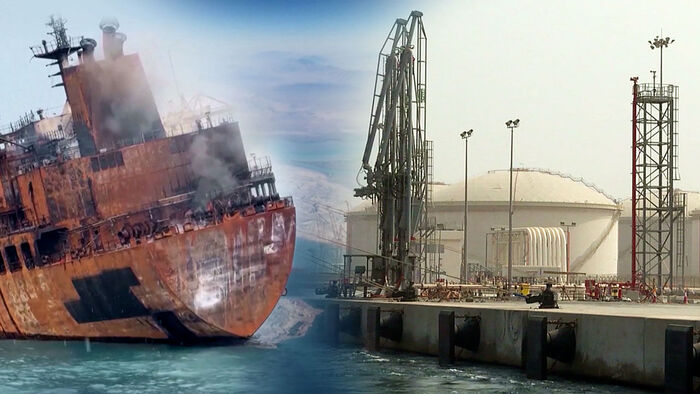
▲ Iranian Oil
The United States plans to immediately implement sanctions waivers on the sale of Iranian oil following the signing of a peace agreement with Iran, the Wall Street Journal (WSJ) reported on June 16 (local time), citing sources familiar with the agreement.
According to the report, the U.S. will waive existing sanctions to allow Iran to sell oil and petroleum products once the formal Memorandum of Understanding (MOU) is signed, which is scheduled for June 19.
The sanctions waivers will also cover all related services, including financial transactions, shipping, and insurance required for the sale of Iranian oil, the sources said.
The WSJ assessed the easing of sanctions on Iranian crude oil as a move to "provide initial financial incentives to help Iran de-escalate the conflict."
United Against Nuclear Iran (UANI), a non-profit organization, analyzed that a large tanker carrying Iranian crude oil departed from Chabahar Port, located in the Gulf of Oman east of the Strait of Hormuz, and passed through the U.S. maritime blockade on that day.
The organization noted that this is the first such instance since the U.S. began blockading merchant vessels traveling to and from Iran in the Gulf of Oman last April.
U.S. President Donald Trump and Vice President JD Vance, along with Iranian Parliament Speaker Mohammad Bagher Ghalibaf, reportedly signed the Memorandum of Understanding (MOU) electronically on June 14.
The official signing ceremony will be held in Geneva, Switzerland, on June 19, with Vice President Vance and Speaker Ghalibaf in attendance.
Although the agreement has not yet been made public, it is reported to contain a broad framework based on the principle of "action for action," which provides benefits such as sanctions relief in exchange for steps Iran will take regarding denuclearization.
Following the signing of the MOU, both countries will immediately cease hostilities and enter into full-scale detailed negotiations over the next 60 days, aiming for a final agreement on nuclear issues and the complete lifting of U.S. sanctions on Iran.
Previously, Iranian media reported that the U.S. had agreed to lift or temporarily waive crude oil export sanctions on Iran during the period of detailed negotiations.
The WSJ reported that a senior U.S. official explained that even if the U.S. preemptively eases sanctions on Iranian oil sales, any sustained relief will depend on how much Iran accommodates U.S. demands regarding key issues, such as the opening of the Strait of Hormuz and its nuclear program.
Farzin Nadimi, an Iran expert at the Washington Institute for Near East Policy, a U.S. think tank, said, "The White House believes that 'carrots' like easing oil sanctions are necessary to extract concessions from Iran," adding, "Without such incentives, it would be difficult to keep Iran at the negotiating table."
※ Please note: This article was translated by AI and may contain errors.