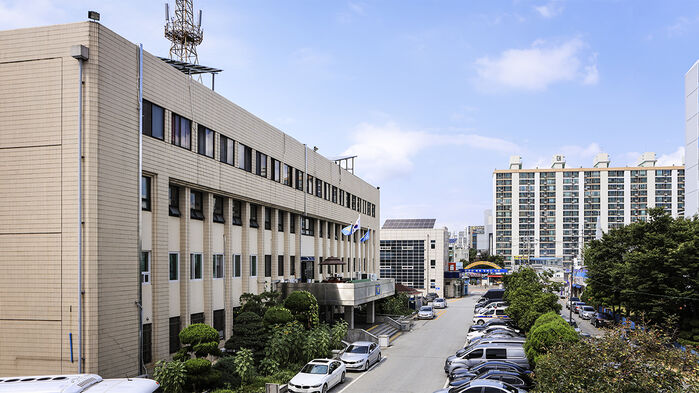
▲ Gwangju Bukbu Police Station
A drunken man who urinated twice on a vehicle parked in an apartment complex after failing to find a restroom has avoided criminal charges, as police determined his actions did not constitute property damage.
According to the Gwangju Bukbu Police Station on Wednesday (June 17), a man in his 50s, identified as A, entered an apartment parking lot in Buk-gu, Gwangju, while intoxicated at 12:00 a.m. on June 4.
After wandering around for about 300 meters, A headed into the parking lot, where there were relatively few people, and urinated toward the driver's side door of a parked car.
About two hours later, A returned to the parking lot, urinated on the same vehicle once more, and left the scene.
The car owner, who discovered the traces of urine on the vehicle, reported the incident to the police that same day, alleging property damage. The police identified A using closed-circuit (CCTV) footage and launched an investigation.
However, after a six-day investigation, the police decided not to book A and closed the case.
They determined that the act of urinating alone does not constitute property damage, as the criminal law requires the function of the property to be lost or its utility to be impaired for such a charge to apply.
The police also considered that the vehicle could be restored to its original state through cleaning, and that legal precedents for similar cases suggest it is difficult to view such acts as an impairment of utility.
During police questioning, A reportedly stated, "I had an urgent need to urinate and could not hold it, and I had no intention of damaging the property (the vehicle)."
A police official stated, "After reviewing relevant precedents and legal principles, we determined that it is difficult to apply the charge of property damage," adding, "However, we plan to review whether the act of urinating in a parking lot used by the general public constitutes public urination under the Minor Offenses Act."
(Photo: Provided by Gwangju Police, Yonhap News)
※ Please note: This article was translated by AI and may contain errors.