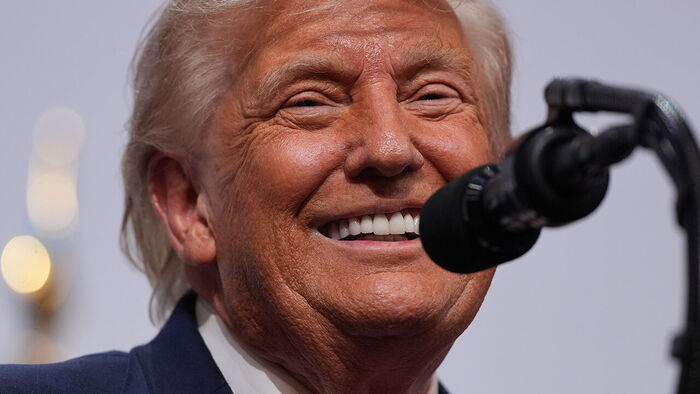
▲ U.S. President Donald Trump
Although the full text of the end-of-war memorandum of understanding (MOU) between the United States and Iran, which had been shrouded in secrecy, was released by the Donald Trump administration on June 17 (local time), several clauses are expected to spark intense controversy in the future.
The MOU, disclosed by a senior U.S. official during a phone briefing on the same day, consists of 14 articles in total.
Among them, Article 5, which specifies Iran's measures regarding the Strait of Hormuz, such as transit fees, mine clearance, and future management systems, is highly likely to be at the center of the controversy.
The article, consisting of three sentences, states, "Upon the signing of this MOU, Iran will do its utmost to prepare so that merchant vessels traveling from the Persian Gulf to the Gulf of Oman, or vice versa, can safely transit without any charge for only 60 days."
The potentially problematic phrase here is "with no charge for 60 days only."
This is because it can be interpreted to mean that after the 60-day negotiation period for a "final agreement" to end the war between the U.S. and Iran following the signing of the MOU, Iran could collect fees from civilian vessels passing through the Strait of Hormuz.
By limiting the free transit through the strait to 60 days, it leaves room for Iran to impose toll-like fees under any pretext in the future.
In addition, another sentence in Article 5 states, "Iran will engage in dialogue with Oman to define the future management and maritime services of the Strait of Hormuz."
Iran has previously stated that while it would not charge a "toll" in the Strait of Hormuz, it would collect fees for the costs incurred by Iran and Oman—which share the strait as territorial waters—in providing "maritime services" for safe transit.
Ultimately, this allows for the interpretation that these details contradict President Trump's previous assertions that the Strait of Hormuz would be completely freely open with absolutely no tolls.
President Trump could face criticism that he rushed into an agreement favorable to Iran to quell soaring public discontent in the U.S. caused by surging energy prices ahead of the midterm elections in November.
Dissatisfaction is also expected to grow among other countries that have procured energy, such as oil and gas, through the Strait of Hormuz.
This is because a financial burden that did not exist before could be newly created due to the war triggered by the U.S. and Israeli attacks on Iran, and this cost could be factored into energy transportation fees, potentially driving up oil prices.
The contents of Articles 4, 10, and 11, which state that the U.S. will begin lifting various military and economic pressure measures against Iran immediately upon the signing of the MOU, could also draw complaints from hardliners against Iran within the U.S.
Article 4 states that the U.S. military's blockade of the strait against Iran, which has been in place since April 13, will begin to be lifted immediately and completed within 30 days. The New York Times (NYT) evaluated this as "a key and immediate victory for Iran, which sends the vast majority of its exports to China."
The NYT also pointed out, "Once revenues begin to flow again, Iran's immediate economic crisis will be alleviated, but the U.S. will lose critical leverage in nuclear negotiations, meaning Iran could have an incentive to hold out and stretch the 60-day negotiations into months or years."
Furthermore, Article 10 commits the U.S. Department of the Treasury to granting sanctions waivers on the export of Iranian crude oil, petroleum, and derivative products, as well as related services such as banking transactions, insurance, and shipping. Article 11 commits the U.S. to issuing all permits and approvals so that Iran's frozen assets can be used immediately.
The NYT pointed out that these clauses could also raise concerns among hardliners against Iran, noting that Iranian military officials or entities designated as terrorists or subject to sanctions could become beneficiaries of the frozen assets even before a "final agreement" is reached in nuclear-related negotiations.
Article 6, which states that the U.S., along with other Middle Eastern nations, will commit to a final and mutually agreed plan worth at least $300 billion (approximately 465.3 trillion won) for Iran's reconstruction and economic development, is also a subject of controversy.
Although President Trump and Vice President JD Vance have emphasized that the U.S. will not contribute a single penny to this $300 billion, it is ultimately a massive financial support package for Iran, shifts the responsibility to other countries, and strongly resembles the "war damage reparations" that Iran has consistently demanded.
In addition, Article 1, in which the U.S. and Iran declare an immediate and permanent end to the war on all fronts, includes "Lebanon" as one of the fronts where the war ends, which could draw complaints from Israel, which initiated the war alongside the U.S.
The NYT noted, "This is a significant dismissal by the United States of Israel's concerns regarding the threat from the Lebanon-based, pro-Iranian militant group Hezbollah."
(Photo: AP, Yonhap News)
※ Please note: This article was translated by AI and may contain errors.