[Anchor]
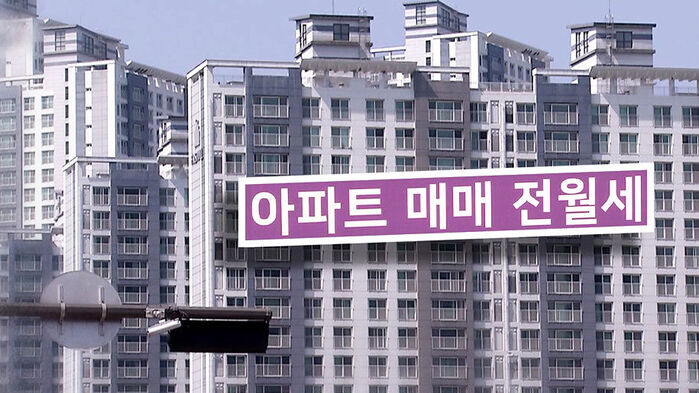
The semiconductor boom is driving up not only stock prices but also housing costs. Following the distribution of high performance-based bonuses, apartment prices in Dongtan-gu, Hwaseong, Gyeonggi Province, have jumped by more than 2% in a single week. There are even reports of sellers canceling contracts by paying double the deposit to withdraw their properties from the market.
Reporter Baek Woon has the story.
[Reporter]
A mixed-use apartment complex in Dongtan-gu, Hwaseong, Gyeonggi Province, which is part of the "semiconductor belt."
In the middle of last month, an 84-square-meter unit was sold for 1.98 billion won. By early this month, the price rose to 2.225 billion won, setting a new record high.
Currently, the asking price for sellers has climbed to as high as 2.5 billion won.
[Yoon Ki-won / Real Estate Agent in Dongtan-gu, Hwaseong, Gyeonggi Province: "Once the agreement (on Samsung Electronics' performance bonuses) was reached, prices began to skyrocket. About one-third of the purchase inquiries are from people working at Samsung or SK Hynix..."]
The weekly growth rate for apartment prices in Dongtan-gu reached 2.22% this week, following a 1.98% increase last week, marking the highest growth rate in the country.
[Yoo Chang-wan / Real Estate Agent in Dongtan-gu, Hwaseong, Gyeonggi Province: "There are cases where sellers cancel contracts by paying double the deposit—about 200 million won—and take their properties off the market. Buyers are also putting down larger deposits."]
Areas along the shuttle bus routes for semiconductor companies, often referred to as "shuttle-convenient zones," such as Byeongjeom-gu in Hwaseong and Suji-gu and Giheung-gu in Yongin, have also seen their weekly growth rates accelerate.
As signs of overheating emerge, there is speculation that some areas in Gyeonggi Province, including Dongtan, could soon be designated as regulated zones.
Apartment prices in Seoul, where the average housing price exceeded 1 billion won for the first time last month, also rose by 0.27%, continuing the trend from last week.
With a decrease in available properties, a "triple strength" trend is continuing, with prices rising across jeonse (long-term deposit rental), monthly rent, and sales.
[Park Won-gap / Senior Real Estate Specialist at KB Kookmin Bank: "To stabilize the housing market, there is a need to significantly increase the supply of non-apartment housing, such as officetels, which can be built relatively quickly."]
With the downward pressure from properties owned by multi-homeowners effectively coming to an end, the tax reform plan to be announced next month and the recent rise in interest rates are considered key variables for the market.
(Reported by Kang Dong-chul | Video edited by Yoon Tae-ho | Graphics by Jang Chae-woo)
※ Please note: This article was translated by AI and may contain errors.
Semiconductor Boom Fuels Housing Price Surge in Dongtan, Rising 2.22%
Jun 19, 2026