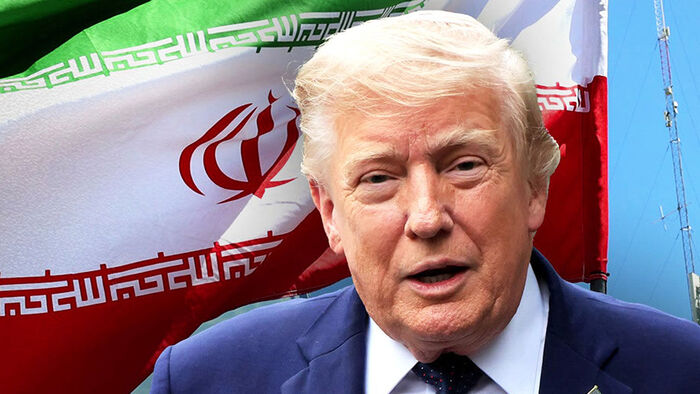
▲ U.S. President Donald Trump
Following the release of the full text of the memorandum of understanding (MOU) to end the war between the United States and Iran, major U.S. media outlets have criticized the agreement, arguing that it offers little to the U.S. while formalizing Iran's control over the Strait of Hormuz.
In an editorial published on June 17 (local time), The Wall Street Journal (WSJ) stated, "The Iranian regime has held the Strait of Hormuz hostage during the war," adding, "The real danger [of this agreement] is that it formalizes Iranian extortion into a new, worse status quo."
The criticism points to the implication that after 60 days from the signing of the agreement, Iran could begin charging tolls to vessels passing through the strait.
Article 5 of the MOU, released on June 17, states, "Iran will do its best to ensure that merchant vessels traveling from the Persian Gulf to the Gulf of Oman, or vice versa, can pass safely without any cost for 60 days."
The WSJ further criticized the deal, noting, "The agreement also grants Iran the authority to define the future management of the Strait of Hormuz through consultations with a subservient Oman," adding, "This is essentially a prescription to hand over the Strait of Hormuz to the dictates of Iranian foreign policy."
The newspaper wrote, "Who can be certain that President Donald Trump, who has already given up the leverage of maritime blockades, oil sanctions, and frozen funds, will achieve a better result after 60 days?" It continued, "Iran will demand more, and if President Trump is as desperate to end the conflict as he has recently appeared, he will likely concede to those demands."
In another editorial published the same day, the WSJ criticized the administration, stating, "Vice President J.D. Vance and President Trump seem to believe that the Iranian regime will abandon its revolutionary cause with nothing more than the bait of flashy hotels and $300 billion in investments."
It further pointed out, "Iran could have enjoyed such hotels and prosperity decades ago, but it has always chosen revolution and terror," adding, "If the Iranian regime does not abandon its nuclear program, it means it prefers the cause of revolution."
While the WSJ is considered to have a conservative perspective among major U.S. media outlets, it has been openly critical of President Trump regarding issues it deems contrary to national interests.
In particular, it has maintained a stance similar to that of hard-line conservative politicians in Israel regarding Middle East policy.
Meanwhile, The New York Times (NYT) also assessed in a previous editorial that President Trump failed to secure almost any of the conditions he had previously insisted upon while ending the four-month war, concluding that "President Trump has lost this war."
In an editorial published on June 15, the NYT wrote, "President Trump hinted at regime change, stated he would not allow Iran any uranium enrichment, and claimed he would unearth and remove all near-weapons-grade nuclear material already in their possession, but none of this appears to have been realized."
The newspaper stated, "Despite exhausting a large number of long-range missiles and interceptors, the U.S. military failed to subdue a much smaller opponent," adding, "To begin repairing this damage, it would be wise for the U.S. to restore its alliances with Europe, the Middle East, and Asia, which are on edge due to the military and economic repercussions of this war."
※ Please note: This article was translated by AI and may contain errors.