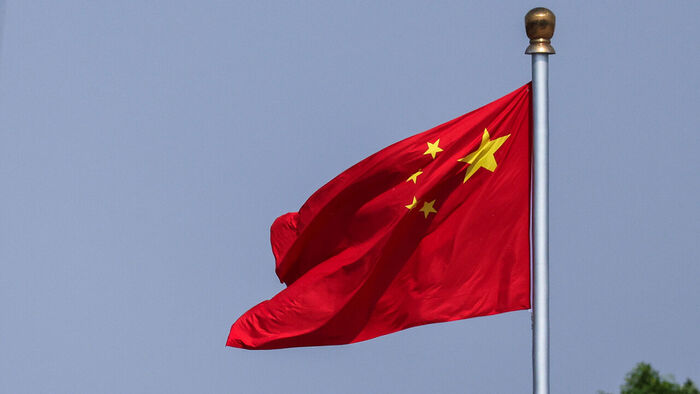
▲ The Chinese national flag
China's non-performing (unrecoverable) household debt has reached 500 trillion won, emerging as a hidden crisis that threatens the country's economic recovery efforts, according to recent observations.
Bloomberg reported on June 18 (local time), citing investment research firm Gavekal Dragonomics, that bad household debt—including credit card loans and mortgages—increased by 21% last year, reaching an estimated record high of over 2.22 trillion yuan (approximately 499 trillion won).
As the Chinese government has stopped disclosing the total scale of personal debt defaults, Gavekal conducted this analysis using data from 26 financial institutions and other sources.
The Academy of Finance at Zhejiang University estimated that the bad personal debt that Chinese financial institutions must handle annually could reach 2 to 3 trillion yuan (approximately 452 to 678 trillion won).
There are also estimates that as of the end of last year, approximately 100 million people—or 10.6% of China's 1.1 billion adult population—may be unable to repay their debts on time.
Zhang Xiaoxi, an analyst at Gavekal, stated that "bad personal debt will continue to rise," adding that there is little chance of improvement without active government intervention.
Bloomberg reported that this debt issue is hindering the government's efforts to boost domestic demand and causing financial institutions to reduce new lending. Retail sales, a key indicator of consumption, fell 0.6% last month compared to the same period last year, marking the first decline in three years and five months.
The report further criticized online lending platforms such as Ant Group for driving the growth of short-term debt. It noted that these platforms act as intermediaries between banks and borrowers, charging interest rates as high as 24% or more per year.
Despite the rise in bad debt, these platforms continue to aggressively market loans using slogans such as "instant loans" and "low interest rates."
Bloomberg reported that China's total household debt has nearly tripled over the past decade, reaching 83 trillion yuan (approximately 18 quadrillion won).
It also expressed concern that while the share of bad debt in total household debt appears to be less than 3% on paper—lower than the approximately 4.8% in the United States—China lacks experience in handling large-scale consumer defaults and has inadequate personal bankruptcy systems.
May Yan of UBS Group estimated that about 5% to 6% of retail loans at major Chinese banks could be non-performing, with the figure potentially higher for smaller banks.
She added that while authorities have recently been trying to lower lending thresholds and financial costs to boost domestic household consumption, the reality differs from expectations, illustrating the dilemma currently faced by the authorities.
(Photo: AP, Yonhap News)
※ Please note: This article was translated by AI and may contain errors.