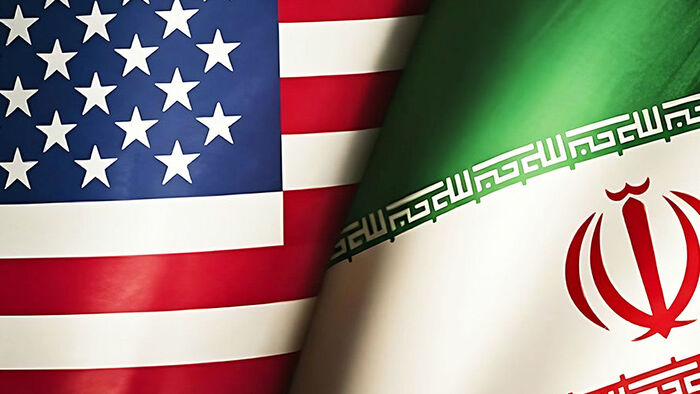
▲ United States, Iran
After the United States and Iran signed a memorandum of understanding (MOU) to end the war, the leaders of both countries are focusing on promoting the achievements of the agreement.
However, a difference in tone is palpable: U.S. President Donald Trump, seemingly conscious of domestic criticism, has focused on "defense" by repeatedly emphasizing the legitimacy of the deal, while Iranian President Masoud Pezeshkian proactively released photos of the MOU signing to flaunt it as a diplomatic feat.
On June 18 local time, Trump wrote on his social media platform Truth Social, "With the Stock Market just setting another All-Time Record, and Oil Prices crashing, these fools who think I wasn't tough enough on Iran are just jealous, bad, or plain stupid."
This is interpreted as an attempt to counter criticism and highlight the deal's success by pointing out the market's positive response, such as rising stock prices and falling oil prices, following the MOU agreement between the U.S. and Iran.
In another post, Trump wrote, "Oil is flowing and Iran will NEVER have a Nuclear Weapon (The World will be Safe!). Stock Market is soaring, Jobs are at an all-time high, and Inflation is coming down (Cost of living relief!)."
He added, "Our Country is stronger, safer, and more respected than ever before."
Trump also posted a link to an article on Truth Social stating that the Pope highly praised the agreement between the U.S. and Iran.
By sharing reports that Pope Leo XIV—who had previously clashed with Trump over his criticism of the war with Iran—evaluated the agreement positively, Trump repeatedly highlighted the legitimacy of the deal.
In a press conference the previous day, Trump assessed the agreement, saying, "We achieved everything we wanted to achieve, and more," adding that it would "end the current conflict, reopen the Strait of Hormuz, and ensure Iran will never possess nuclear weapons."
However, many in the U.S. argue that the achievements presented by Trump are exaggerated.
Critics point out that Iran began blockading the Strait of Hormuz and using it as leverage following the war initiated by the U.S., and that the period during which no transit fees are charged is specified as only "60 days" in the MOU, leaving room for Iran to impose fees in the future.
Furthermore, it remains uncertain how Trump's primary goal of the war—preventing Iran from possessing or purchasing nuclear weapons—will be concretely implemented in future follow-up negotiations.
Concerns over economic fallout also appear to have driven Trump to rush the agreement.
In his press conference the previous day, he said that the escalation of military conflict with Iran "could have caused a global recession," adding, "What I did not want to see was an economic catastrophe."
Analysts suggest that amid fears of rising oil prices and mounting inflationary pressures from a prolonged war, Trump could not ignore the potential economic fallout and subsequent political backlash ahead of the upcoming midterm elections in November.
Vice President JD Vance also focused on deflecting criticism that the U.S. made unilateral concessions to Iran. During a White House briefing on the same day, Vance emphasized that any economic benefits or sanctions relief Iran receives through this agreement will only be possible if Iran complies with the deal and changes its behavior.
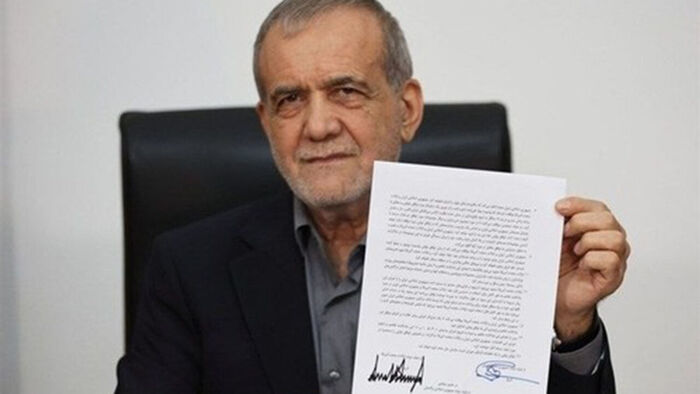
▲ Iranian President Masoud Pezeshkian signs the memorandum of understanding to end the war
Meanwhile, Iranian President Pezeshkian released the full text of the war-ending MOU signed by himself and Trump via X (formerly Twitter).
The MOU he posted consists of two versions—a three-page English version and a two-page Persian version—with both presidents' signatures on each page.
Pezeshkian described the MOU as "a historic document and a message from a strong Iran."
He added, "This document reflects the voice of a nation that has not traded its dignity and independence under any threats or pressure," emphasizing that "the achievement recorded today is the result of a combination of national patience, political rationality, and responsible diplomacy."
Photos released through Iran's state-run IRIB broadcaster also showed Pezeshkian holding up the signed MOU with both hands.
This is interpreted as a domestic and international propaganda move to frame the agreement as a victory for Iran, highlighting that the country did not yield to U.S. military pressure and successfully extracted economic incentives, such as sanctions relief, from the U.S.
The White House later posted a video on its X account showing Trump signing the MOU.
The White House wrote, "The rumor that the U.S. is paying $300 billion to Iran is fake news. All the U.S. gets is success, lower oil prices, and victory," calling it "propaganda spread by the Democrats."
This also appears intended to block criticism that the administration made excessive concessions to Iran and to frame the controversy as a political offensive launched by the Democrats.
(Photo: IRIB Telegram Channel Capture, Yonhap News)
※ Please note: This article was translated by AI and may contain errors.