[Anchor]
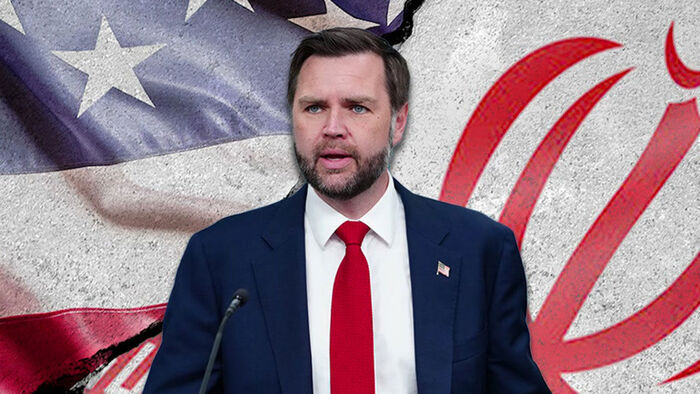
The main negotiations between the United States and Iran, originally scheduled to take place in Switzerland today, are facing difficulties from the very start. The White House has announced that Vice President Vance has postponed his trip to Switzerland.
Reporter Yoo Deok-gi has the story.
[Reporter]
Negotiations between the two countries, which were set to follow immediately in Switzerland in accordance with the memorandum of understanding (MOU) on ending the war officially signed by the U.S. and Iranian presidents, are being delayed.
The White House announced that Vice President Vance, who is leading the new negotiations regarding Iran's nuclear program, has postponed his travel schedule to Switzerland.
The White House explained that while the negotiating team was prepared for departure, the schedule was delayed due to "logistical and administrative issues" regarding the progress of the talks.
The Associated Press noted that this White House announcement came shortly after Al-Mayadeen, a pro-Hezbollah media outlet, reported that "Iran is delaying sending a delegation to Switzerland because Israel has not ceased its military operations in Lebanon."
As criticism poured in—even from the U.S. conservative camp—labeling the MOU a defeat, Vice President Vance actively stepped forward to provide clarification.
Vice President Vance emphasized the effects of the ceasefire agreement, stating that restrictions on navigation in the Strait of Hormuz have been lifted, allowing 12.5 million barrels of crude oil to pass through the Persian Gulf overnight.
He also drew a line, stating that the promised rewards to Iran would only be provided if Iran changes its behavior.
[JD Vance / U.S. Vice President: We have currently driven Iran into an economic stalemate, and we will not lift sanctions until Iran fundamentally changes its behavior.]
In particular, it is reported that Middle East Envoy Steve Witkoff explained follow-up measures regarding Iran's nuclear program, which were not included in the MOU, to members of the U.S. Congress during a closed-door briefing.
The Associated Press reported that Envoy Witkoff stated, "Iran will invite the International Atomic Energy Agency (IAEA) to inspect its nuclear facilities and will begin the work of identifying and verifying the locations of uranium enrichment nuclear materials."
(Video Editing: Park Na-young)
※ Please note: This article was translated by AI and may contain errors.
U.S. Vice President Vance Postpones Switzerland Visit; Nuclear Talks Hit Early Snag
Jun 19, 2026