[Anchor]
With the leaders of the United States and Iran officially signing a memorandum of understanding (MOU) on peace negotiations, a 60-day period for main talks has begun. However, unlike the sudden signing, follow-up negotiations are already showing signs of difficulty. Let’s connect to the scene for more details.
Correspondent Kwon Yeongin, are you saying the working-level talks scheduled for today, June 19, have been canceled?
[Reporter]
Yes, that is correct.
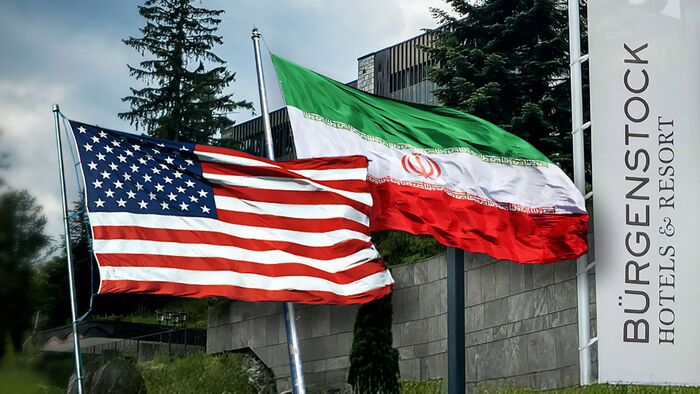
I am currently in Bürgenstock, Switzerland, where the U.S. and Iran were set to hold working-level negotiations.
Just yesterday, the atmosphere was tense as the talks seemed imminent, with air travel completely banned within a 46km radius and access to the area restricted.
However, the Swiss government officially confirmed a short while ago that the working-level talks scheduled for today have been canceled.
Both the Iranian and U.S. delegations postponed their travel plans to Switzerland, and no information has been provided on when the talks might be rescheduled.
The issue appears to stem from the situation in Lebanon.
Reports have emerged that Iran has raised concerns with the U.S. and mediating countries, claiming that Israel is violating the agreement to immediately cease hostilities in Lebanon.
Even after the signing of the peace MOU, casualties continue to occur in Lebanon due to clashes between the Israeli military and the pro-Iranian militant group Hezbollah.
Vice President Vance issued a strong warning to Israel, which is refusing to withdraw troops from Lebanon and has become an obstacle from the very start of the main negotiations.
[J.D. Vance / U.S. Vice President: Those in Israel who think President Trump is the problem need to wake up and realize the reality that Israel is facing.]
[Anchor]
There are numerous sensitive challenges, and the atmosphere seems ominous from the very beginning, doesn't it?
[Reporter]
Yes, that is correct.
The main negotiations between the U.S. and Iran have a 60-day deadline, ending on August 16.
If they fail to reach an agreement on the disposal and verification of nuclear materials within that timeframe, there is a risk that the nuclear issue will remain unresolved while Iran benefits from measures such as imposing transit fees in the Strait of Hormuz, potentially causing global energy supply disruptions once again.
As criticism grows over a "hasty deal," the U.S. is emphasizing that Iran must first fulfill its promises and change its behavior before any rewards can be provided.
However, Iran's Supreme Leader Mojtaba Khamenei has publicly declared that Iran will not accept excessive demands from the U.S. during the main negotiations.
Meanwhile, Iran has begun accepting applications from ships wishing to pass through the Strait of Hormuz via the newly established Strait of Hormuz Authority.
Twenty-four South Korean vessels have also applied, and it appears our ships will be required to follow the transit schedules and routes determined by Iranian authorities.
(Video by Kim Si-nae, Video Editing by Kim Byeong-jik)
※ Please note: This article was translated by AI and may contain errors.
U.S.-Iran Working-Level Talks Canceled: A Rocky Start
By Kwon Yeongin | Jun 19, 2026