[Anchor]
Following Israel's continued airstrikes in Lebanon, Iran has officially declared a "new blockade" of the Strait of Hormuz. President Trump immediately fired back, suggesting that the U.S. could impose its own transit fees on the strait. Amidst this tension, both sides have just begun negotiations.
Reporter Park Won-kyung has the story.
[Reporter]
Iran announced the new blockade of the Strait of Hormuz late last night, Korea Standard Time.
Tehran pointed to the fact that Israel's airstrikes in Lebanon are continuing, despite Article 1 of the memorandum of understanding with the U.S. stating that all military operations, including those in Lebanon, would cease upon signing.
[Iranian News Anchor: The Iranian Navy has warned that vessels should not pass through the Strait of Hormuz. Those who do not follow these instructions will face great danger.]
However, a spokesperson for U.S. Central Command, which oversees the Middle East, stated that the Strait of Hormuz remains open and that transit is continuing.
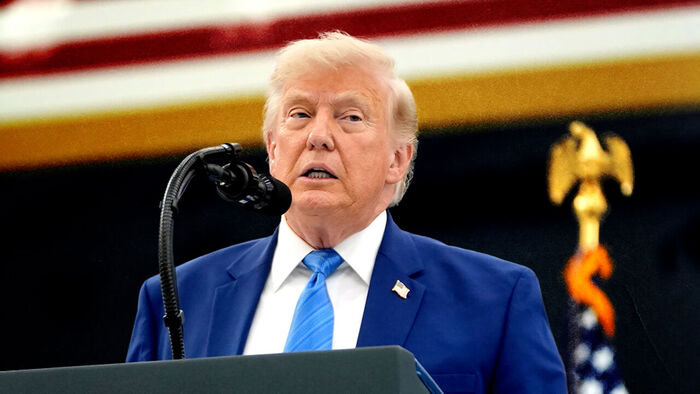
U.S. President Donald Trump countered Iran's blockade declaration by stating that if the agreement with Iran ultimately fails, the U.S. could impose its own transit fees on the strait.
He argued that this would be to recoup the costs of the services the U.S. has provided, and will continue to provide, as the "guardian angel" of Middle Eastern nations.
While the two sides appear to be posturing ahead of working-level talks, delegations from both the U.S. and Iran have been arriving in Switzerland.
U.S. Vice President J.D. Vance, the head of the U.S. delegation, stated that the core agenda would be the Iranian nuclear issue and a ceasefire in Lebanon.
[J.D. Vance / U.S. Vice President: We are looking forward to making progress on the nuclear issue and the issue of a ceasefire in Lebanon. These are the two key issues we are focused on.]
The Iranian delegation arrived in Switzerland on a plane displaying the number of victims from an elementary school bombing, seemingly intended to highlight U.S. war crimes.
[Esmaeil Baghaei / Iranian Foreign Ministry Spokesperson: In these negotiations, we intend to strongly demand that the U.S. fulfill its promised obligations.]
The U.S. has stated that the negotiations are expected to last about two days, while Iran has suggested they will last only one day, indicating that the two sides are already at odds over the schedule of the talks.
(Video Editing: Lee Seung-yeol)
※ Please note: This article was translated by AI and may contain errors.
U.S. Retaliates After Iran Declares New Blockade of Strait of Hormuz; Negotiations Begin in Switzerland
Jun 21, 2026