[Anchor]
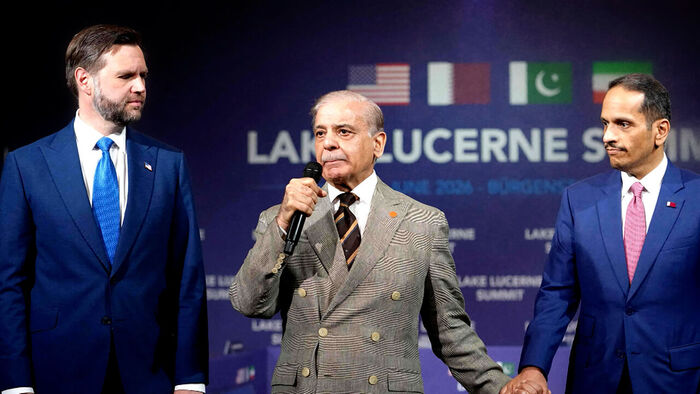
High-level ceasefire negotiations between the United States and Iran, which were on the brink of collapse, have fortunately taken their first step. A joint statement was released following an 18-hour overnight session. Both sides have reached an initial agreement to establish management frameworks for the Strait of Hormuz and the conflict in Lebanon, which were the most significant points of contention.
Our first report is from Yoo Deok-gi.
[Reporter]
U.S. Vice President JD Vance, who arrived at the summit venue in Bürgenstock, Switzerland, ahead of the Iranian delegation on the 21st (local time), reaffirmed that the abandonment of Iran's nuclear weapons program remains the United States' top priority.
[JD Vance / U.S. Vice President: If Iran is willing to abandon its long-term nuclear ambitions, the United States is prepared to fundamentally change its relationship (with Iran).]
Although the marathon negotiations began, Iran remained firm.
Iran persistently pressed the issue of Israel's ongoing attacks in Lebanon.
[Hossein Ghorbanzadeh / Head of Iranian Delegation: Naturally, Lebanon is one of the main fronts that must declare an end to the war. If (the Lebanon issue) is not resolved, the subsequent topics will clearly not be negotiated.]
In the early hours of the 22nd, 18 hours after the talks began, the mediating nations, Qatar and Pakistan, announced that the first high-level meeting had concluded and released a joint statement detailing the results.
First, it was agreed to establish a de-escalation mechanism involving the United States, Iran, and Lebanon to ensure a cessation of military operations in Lebanon—essentially a guarantee of a ceasefire.
Regarding the Strait of Hormuz, the parties agreed to guarantee the safe passage of merchant vessels for 60 days and to establish a communication channel between the involved nations.
For the implementation of the memorandum of understanding, including the Iranian nuclear issue and the lifting of sanctions, the U.S. and Iran have agreed to form a high-level committee to oversee working-level discussions.
After the talks concluded, Ghalibaf, the head of the Iranian delegation, was seen leaving the venue with a faint smile, and Iranian Foreign Minister Araghchi also assessed the results positively, stating that significant progress had been made.
Working-level negotiations are scheduled to continue in Bürgenstock, Switzerland, throughout this week. Iran has signaled that the Lebanon de-escalation mechanism will serve as the first practical test and will remain a key factor in future negotiations.
(Video Editing: Lee Seung-yeol, Design: Jang Chae-woo)
※ Please note: This article was translated by AI and may contain errors.
18-Hour Marathon Talks Conclude: Agreement Reached on Managing Hormuz and Lebanon
Jun 22, 2026